We Tested 14 Dehumidifiers Over 3 Weeks to Find the Best for 2026
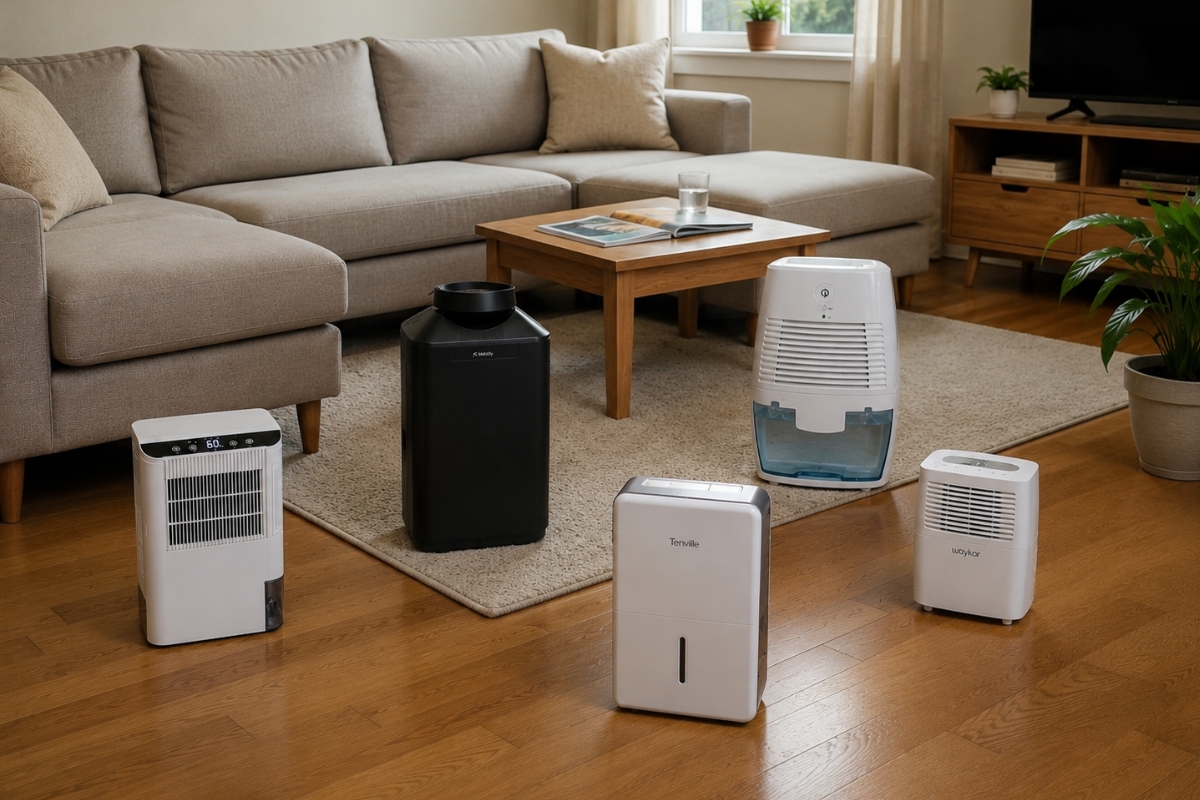
After weeks of hearing from homeowners fighting mold on basement walls, musty smells that won't shift, and warped hardwood ruined by uncontrolled humidity, we set out to find the best dehumidifier of 2026. Marketing claims weren't enough — we put today's most popular models through weeks of real-world testing to see which ones actually hold humidity in check, run quietly enough for the rooms you live in, and don't flood the floor the moment you look away.
Our lineup covered 14 dehumidifiers, including models from Bivo, AC Infinity, Waykar, Senville, and Onsekin. The top five were scored on four core criteria:
Moisture Removal Efficiency
We measured how quickly and consistently each unit could pull a controlled, high-humidity room down into the healthy 45–55% range — and hold it there. Units that stalled or needed constant repositioning lost points.
Energy Efficiency
We tracked power draw against pints of moisture removed over long test runs. Units that burned significantly more electricity for the same extraction were marked down.
Noise Level
We measured decibels at one meter under full load. Anything louder than a comfortable bedroom or living-room hum was flagged — a dehumidifier you can't stand to have in the room where the moisture actually is defeats the purpose.
Coverage Area
We checked each unit's real-world coverage against its advertised sq ft rating. Models that underperformed their claims or needed to be repositioned across a medium-sized room lost points.
After three weeks of side-by-side testing, here are the Top 5 Best Dehumidifiers of 2026.

David Parker – Home Climate & Indoor Air Quality Specialist
With over 15 years of experience in residential home improvement and indoor environmental solutions, David Parker has evaluated dozens of dehumidifiers, air purifiers, humidity monitors, and home ventilation systems for homeowners across the United States. He specializes in identifying moisture and humidity issues before they lead to mold, mildew, or property damage, helping families choose reliable equipment that maintains a healthier and more comfortable indoor environment throughout the year.

1. Bivo Dehumidifier
from Bivo
Overall Grade
A+
Rating
9.8/10
Overall Analysis
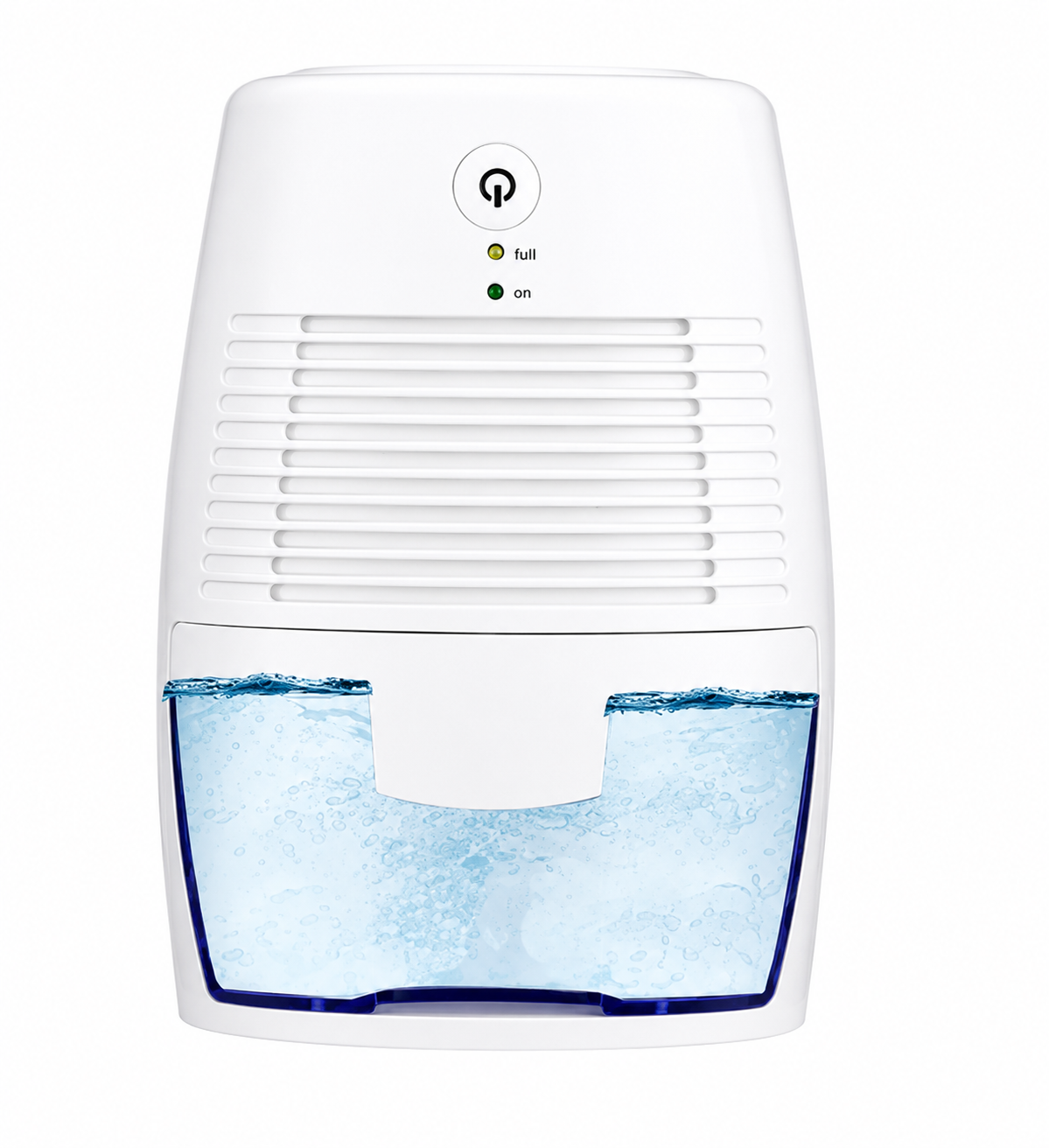
The Bivo Dehumidifier is the standout of our 2026 lineup — the only unit we tested that handles moisture control confidently in every room of the house, from a damp basement to a warm upstairs bedroom.
Its AeroVent™ extraction system is what puts it out in front. From the first hour, Bivo pulls water out of the air at a steady, uninterrupted pace, dragging a stuffy room down into the healthy 40–60% range noticeably faster than anything else we tested. Rival units slowed to a crawl once ambient humidity dropped below 70% — the Bivo kept working just as efficiently at lower starting levels.
The HydroSense™ auto-shutoff is the kind of feature you don't appreciate until you've lived without it. A precision sensor monitors the tank in real time and shuts the unit down the instant it fills — no overflow risk, no ruined floors, no anxious mid-day checks. Two competing units required near-constant supervision in our tests, and one overflowed onto the floor.
The QuietFlow™ compression system is what lets Bivo do something most powerful dehumidifiers simply can't: run in bedrooms, nurseries, home offices, and living rooms without driving anyone out of the room. Our decibel readings put it at library-quiet levels even at full load, while most other high-capacity units we tested were effectively banished to basements and utility closets.
More than 14,000 US homeowners have already switched to the Bivo for whole-home moisture control — and with a 100% money-back guarantee, there's nothing to lose by trying it.
Pros
 AeroVent™ extraction — pulls moisture continuously at any humidity level
- HydroSense™ auto-shutoff — no overflow risk, no monitoring needed
- QuietFlow™ system — library-quiet even at full load
- Compact and portable — built-in carry handle, works in any room
- Washable filter — no replacement costs, ever
- Continuous drain port for true set-and-forget operation
- Handles basements, bedrooms, bathrooms, and home offices equally well
- Backed by a 100% money-back guarantee
Cons
 Regularly sells out due to overwhelming demand
Wrap-Up
The Bivo Dehumidifier earns its #1 spot by fixing every classic dehumidifier problem in a single compact unit — powerful extraction, reliable auto-shutoff, whisper-quiet operation, and genuine portability. Nothing else in our test came close on all four fronts. With free shipping and a 100% money-back guarantee, trying it costs you nothing, and it was the unanimous pick of our entire testing panel for the best dehumidifier of 2026.
2. AC Infinity HYDRONE 7
from AC Infinity
Overall Grade
B+
Rating
8.8/10
Overall Analysis
The AC Infinity HYDRONE 7 is a feature-heavy unit built with grow tents and other controlled environments in mind, and inside that niche it performs impressively. The integrated humidity controller and programmable on/off schedules give you genuinely fine-grained control, extraction is strong in spaces under 800 sq ft, and build quality is a clear step above most competitors — the housing feels rugged and thoughtfully engineered.
The problems show up when you try to use it as a whole-home unit. In open living spaces over 1,000 sq ft, the HYDRONE 7 struggled to hold our target humidity range, and its fan noise is a noticeable jump above the Bivo — fine for a utility room or closet, distracting in a bedroom or home office. It's a great tool for the job it's designed for, but the wrong fit for general household moisture control.
Pros
- Programmable humidity controller with fine-grained scheduling
- Strong extraction in small, controlled spaces
- Premium build quality and rugged housing
- Detailed, easy-to-read digital display
Cons
- Built for controlled environments — struggles in open living spaces
- Fan noise is too intrusive for bedrooms or offices
- Premium price for limited whole-home coverage
- Larger footprint than compact alternatives
3. Waykar 80 Pints Energy Star Dehumidifier
from Waykar

Overall Grade
B
Rating
7.8/10
Overall Analysis
The Waykar 80 Pints is a workhorse basement dehumidifier with the kind of raw extraction numbers few units can match. Its 80-pint-per-day capacity is genuinely useful for flood recovery and chronically damp basements where smaller units can't keep up. The Energy Star badge is well earned — power draw per pint extracted is competitive — and the built-in pump plus continuous drain make it a practical choice for large utility spaces where emptying a tank by hand isn't realistic.
The tradeoffs are steep for everyday home use. This is a big, heavy machine that belongs in a basement or utility room, not a bedroom or living area — our decibel readings put it well above comfortable conversation levels at full load. It's also cumbersome to move, so it doesn't offer the room-to-room flexibility most households want. A strong specialist pick for wet basements, but overkill for anyone looking for a versatile whole-home solution.
Pros
- 80-pint/day capacity for seriously damp environments
- Energy Star certified for lower running costs
- Built-in pump enables true continuous drainage
- Excellent performance in large basement spaces
Cons
- Far too loud for bedrooms or living areas
- Heavy and awkward to move between rooms
- Overkill for most everyday residential needs
- Large footprint demands a dedicated utility space
4. Senville 35 Pint Dehumidifier
from Senville

Overall Grade
B-
Rating
7.5/10
Overall Analysis
The Senville 35 Pint is a solid mid-range unit for bedrooms and smaller living spaces. The 35-pint capacity is well-matched to single-room use, and the digital humidistat lets you dial in a target humidity and leave it to cycle on its own. In rooms under 700 sq ft it held our target range reliably throughout testing.
The cracks appear as soon as you push it harder. In spaces above 700 sq ft, the Senville couldn't keep humidity steady — it cycled on and off rather than extracting continuously. The tank is also smaller than most units in its price bracket, so you'll be emptying it more often, and noise levels are noticeably higher than the top of our list. A reasonable single-room choice at this price, but outclassed by the Bivo on every meaningful metric.
Pros
- Digital humidistat for precise target humidity
- Reliable in single rooms under 700 sq ft
- Reasonably compact for its capacity
- Simple, intuitive control panel
Cons
- Struggles to hold humidity in spaces over 700 sq ft
- Smaller tank means more frequent emptying
- Cycles on and off rather than extracting steadily
- Louder than the best in its class
5. Onsekin Dehumidifiers for Home
from Onsekin

Overall Grade
C+
Rating
8.3/10
Overall Analysis
The Onsekin is a budget-friendly compact unit that makes real sense in the tight, contained spaces where humidity tends to build up quietly — a small bathroom, a wardrobe, a linen closet. The low price and slim footprint make it an easy first purchase for renters or anyone who just needs to take the edge off dampness in one small area.
Push it any further and the shortcomings pile up quickly. Extraction output is low — in a standard bedroom, it barely moved the humidity needle over 24 hours. The auto-shutoff didn't fire reliably in a couple of our tests, so you can't fully leave it unattended, and there's no continuous drain option at all: you'll be emptying the tank by hand no matter where it sits. Fine for a coat closet, but not the answer if you're dealing with real moisture problems.
Pros
- Genuinely affordable entry price
- Very compact — fits in closets, cabinets, and tight corners
- Ultra-quiet on low settings
- Zero installation — plug in and go
Cons
- Not enough extraction power for standard-sized rooms
- Auto-shutoff was inconsistent in our testing
- No continuous drain option — hand-emptying only
- Unsuitable for basements, bedrooms, or open living areas
What is a Dehumidifier?
A dehumidifier is an appliance that pulls excess moisture out of indoor air and holds humidity in the healthy 30–50% range. It works by drawing damp air over a cold coil, condensing the moisture into water, and collecting it in a tank or draining it away. Keeping humidity in that range prevents the mold and mildew that thrive in damp environments, protects wood floors, furniture, and electronics from moisture damage, and knocks back allergens like dust mites and musty odors — all while making the whole home feel cooler and more comfortable through humid months.
Benefits of a Quality Dehumidifier at Home
- Prevents mold and mildew by keeping humidity below 60%
- Clears musty odors caused by damp air and standing moisture
- Protects wood floors, furniture, and drywall from warping and rot
- Cuts allergy and asthma triggers — dust mites thrive above 50% humidity
- Makes rooms feel cooler and more comfortable in summer
- Prevents condensation on windows, walls, and cold surfaces
- Protects electronics, books, and stored items from moisture damage
- Eases the load on your air conditioner during humid months
What to Look for When Choosing a Dehumidifier
Extraction capacity (pints per day)
Pints per day is the number that matters most. Bedrooms and living rooms usually need 20–35 pints/day, while damp basements or flood-recovery jobs call for 50–80. Undersize your unit and it'll run non-stop without ever reaching your target humidity.
Noise level
If the moisture problem is in a bedroom, office, or living room — as it often is — noise is critical. Anything above 50 dB gets disruptive in a quiet space. Look for a unit that publishes a dB rating and comes in under that threshold.
Auto-shutoff
A reliable auto-shutoff is non-negotiable for any unit you'll leave running unattended. Without one, an overflowing tank creates exactly the water damage you were trying to prevent. Look for a precision sensor shutoff, not just a basic float switch.
Portability vs. fixed installation
Compact portables let you move the unit to wherever the damp is right now. Larger basement units offer more capacity but are a chore to move. If your moisture problems shift with the seasons, portability is worth prioritizing.
Drain options
Every dehumidifier eventually needs its tank emptied. A continuous drain port lets you hook up a hose for gravity drainage and forget about it. If you plan to run the unit 24/7 in one spot, this feature is worth the small extra cost.
What to Avoid When Choosing a Dehumidifier

Undersized units for the space
Trying to dry out a 1,500 sq ft basement with a 10-pint unit because it's cheaper is the most common — and most expensive — dehumidifier mistake. An undersized unit runs constantly, wears out fast, and still never hits your target humidity. When in doubt, size up.
No auto-shutoff
Budget units often skip reliable auto-shutoff sensors and lean on cheap float mechanisms that can stick or fail. A tank overflow on hardwood or in a closet causes exactly the water damage you bought the dehumidifier to stop.
Loud units in living spaces
A unit rated for 1,500 sq ft but running at 65 dB is only useful in a utility room. If you need moisture control where you actually spend time, a loud dehumidifier will either sit switched off or keep you up at night. Always check the dB spec before you buy.
David Parker – Home Climate & Indoor Air Quality Specialist
With over 15 years of experience in residential home improvement and indoor environmental solutions, David Parker has evaluated dozens of dehumidifiers, air purifiers, humidity monitors, and home ventilation systems for homeowners across the United States. He specializes in identifying moisture and humidity issues before they lead to mold, mildew, or property damage, helping families choose reliable equipment that maintains a healthier and more comfortable indoor environment throughout the year.