We Tested 15 Electric Screwdrivers to Find the Most Precise and Reliable for 2026
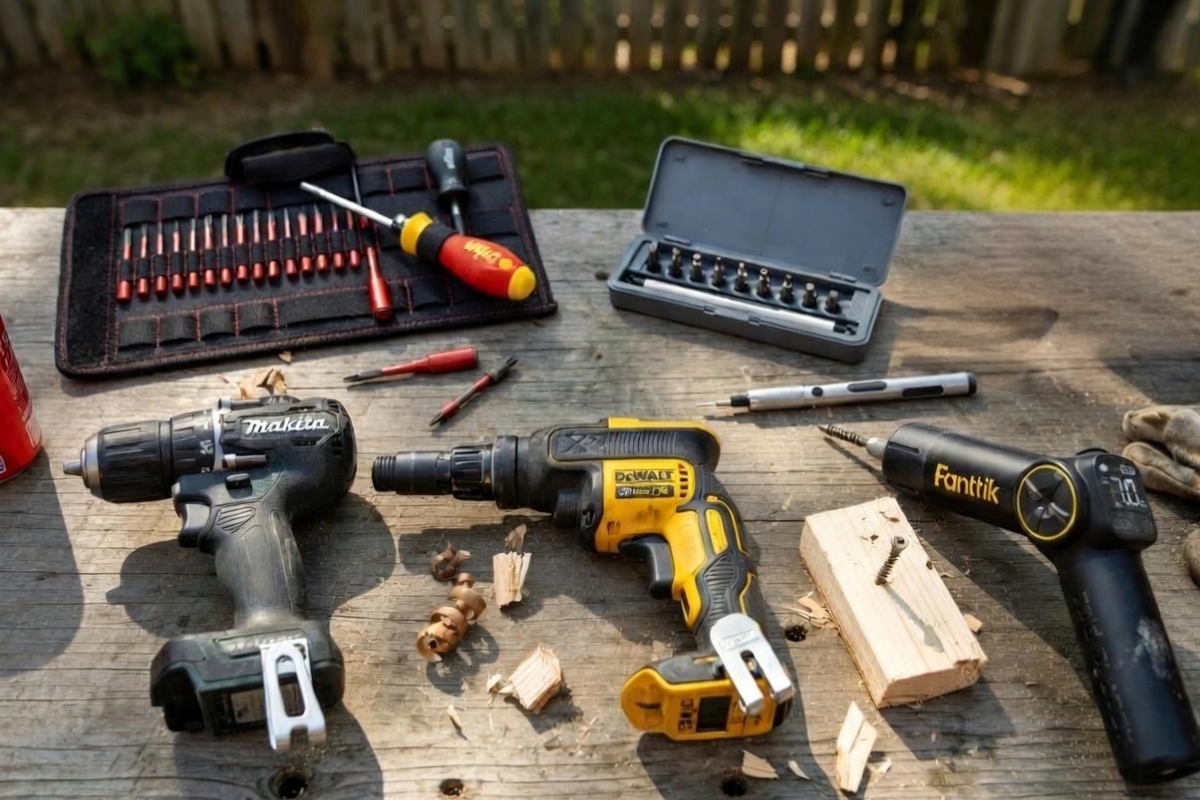
Most electric screwdrivers strip screws, overdrive into soft materials, or lack the torque range needed for anything beyond flat-pack furniture. We tested 15 of the most popular electric screwdrivers of 2026, evaluating each for clutch precision, speed control, work-light quality, battery life, and real-world performance across wood, drywall, sheet metal, and electronics.
We ran models from Bivo, Fanttik, DEWALT, Wiha, and Makita through furniture assembly, electronics repair, cabinet installation, and drywall work to find which tools consistently deliver the precision and reliability that separate a finished job from a do-over.
Torque & Fastening Performance
We measured peak torque, clutch accuracy, and how consistently each screwdriver drove fasteners to the correct depth across wood, drywall, and sheet metal. A tool that strips screws or over-drives at the first hint of resistance is not just frustrating — it damages your work and forces you to start again.
Precision & Clutch Control
We evaluated how effectively each clutch setting prevented overdriving and whether torque stepped reliably between settings. Consistent, repeatable clutch performance is what separates a precision tool from a basic one — especially for electronics repair, cabinetwork, and any task where depth control matters.
Ergonomics & Ease of Use
We assessed grip comfort, balance, form factor, trigger sensitivity, and how natural each tool felt during extended use. A well-balanced, comfortable screwdriver reduces wrist fatigue and improves accuracy on delicate tasks.
Battery Life & Charging
We timed usable runtime under continuous operation and evaluated charging speed, connection convenience, and battery-indicator accuracy. We also factored in platform costs — tools sold without a battery are not ready to use at the listed price.
Value & Guarantee
We weighed price against the features and performance delivered, including return policies and warranty coverage that protect the buyer's investment. A higher price is only justified when the extra features provide a meaningful real-world benefit.
After hands-on testing across 15 models, here are the Top 5 Best Electric Screwdrivers for 2026.

Ryan L – Home Improvement & Power Tools Specialist
With more than 14 years of hands-on experience evaluating power tools and home improvement equipment, Ryan specializes in testing drills, electric screwdrivers, impact drivers, and fastening tools for DIY enthusiasts, professionals, and homeowners. He has personally evaluated hundreds of tools for precision, durability, power, ease of use, and real-world performance across a wide range of materials and everyday projects.

1. Bivo FixCore Pro
from Bivo
Overall Grade
A+
Rating
9.8/10
Overall Analysis
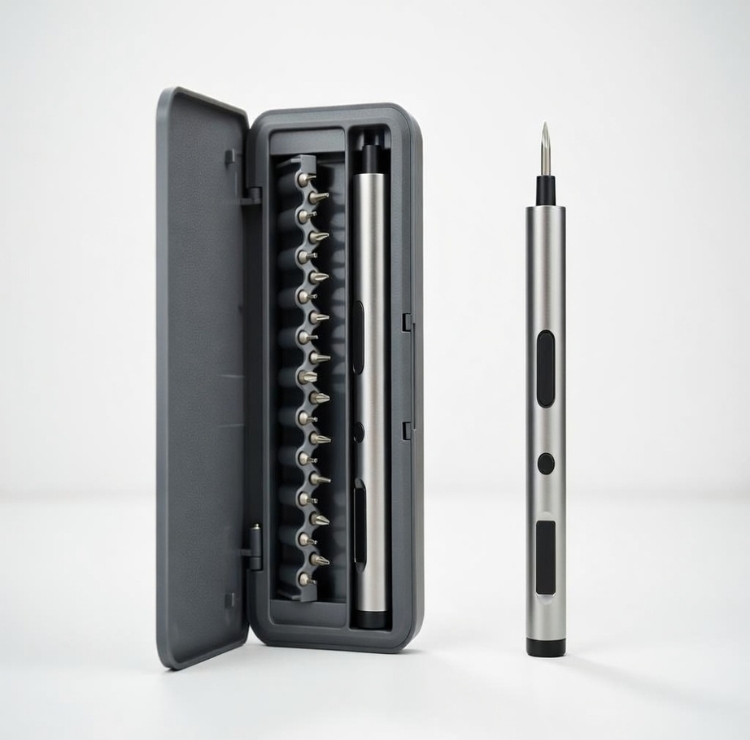
The Bivo FixCore Pro stood out immediately as the most capable electric screwdriver in our lineup — and the margin between it and the rest of the field was unmistakable.
Its 21-level electronic clutch is the headline feature. Instead of settling for a few broad presets, you can dial in the exact torque needed for each material: light settings for electronics and delicate trim, stronger settings for furniture and cabinetry. The clutch disengages cleanly every time, so stripped screws, cam-out, and damaged surfaces are essentially eliminated.
The 2-speed transmission adds another layer of practicality. At 200 RPM, you have the control needed for precision work; at 500 RPM, you can drive screws quickly across larger jobs. Most electric screwdrivers force you to choose between accuracy and speed — the Bivo FixCore Pro simply gives you both.
For real-world usability, the shadowless LED ring light is a genuine advantage. A single-point LED often casts a shadow directly over your work area, but the ring design surrounds the bit with light from every angle. That makes it far easier to see what you are doing in cabinets, under furniture, or in dim corners.
USB-C charging delivers a full battery in under two hours, the magnetic bit holder keeps the working bit firmly in place, and the compact form factor fits just as easily in a kitchen drawer as it does in a full tool chest.
For furniture assembly, electronics repair, cabinet installation, and general home improvement, the Bivo FixCore Pro is the most versatile and reliable option we tested. It carries a 4.2-star rating from more than 14,000 customers and is backed by a 90-day money-back guarantee.
Pros
 21-level electronic clutch for precise torque control across materials
- 2-speed operation (200 / 500 RPM) covers precision work and faster driving
- Shadowless LED ring light eliminates harsh shadows in tight spaces
- USB-C fast charging — full battery in under two hours
- Magnetic bit holder keeps bits secure between fasteners
- Compact, lightweight cordless design
- Suitable for wood, drywall, soft metals, and electronics
- 4.2/5 Trustpilot rating from over 14,000 customers
- Free shipping
- 90-day money-back guarantee
Cons
 High demand occasionally causes temporary stock shortages
Wrap-Up
The Bivo FixCore Pro is the best electric screwdriver of 2026 by a clear margin. Its 21-level clutch and 2-speed transmission handle everything from electronics repair to heavy furniture assembly with confidence — a combination no other model in this comparison can match. Add the shadowless ring LED, USB-C charging, and a risk-free 90-day guarantee, and it is the obvious choice for any workspace.
2. Fanttik S1 APEX Electric Screwdriver
from Fanttik

Overall Grade
A
Rating
9.4/10
Overall Analysis
The Fanttik S1 APEX is a compact, premium-feeling electric screwdriver built around an OLED display, three torque presets, and an aluminum body. It is USB-C rechargeable, stores bits inside the handle, and handles light home repair and furniture assembly without fuss.
In testing, the S1 APEX proved capable for lighter workloads but showed its limits as tasks grew more demanding. The three preset torque modes offer far less granularity than the Bivo FixCore Pro's 21-level clutch — you select a broad setting rather than matching torque to the exact material. Battery life also fell short of the stated figure under sustained use, and the OLED display, while attractive, adds cost without improving fastening performance.
For occasional household use and furniture assembly, the Fanttik S1 APEX is a solid, well-made tool. For users who need real precision across a range of materials and project types, the Bivo FixCore Pro's 21-level clutch and shadowless LED ring deliver a more practical performance advantage.
Pros
- OLED display shows torque mode and battery level
- Aluminum body gives a premium, durable feel
- USB-C charging with integrated bit storage
- Compact form factor for tight spaces
- Three torque preset modes
Cons
- Only three torque presets — much less granularity than 21-level competitors
- Battery life runs shorter than rated under sustained use
- Bit storage relies on the same magnetic holder rather than a dedicated compartment
- Higher price relative to the performance delivered
3. DEWALT DCF622B Versa-Clutch Screwgun
from DEWALT

Overall Grade
B
Rating
8.9/10
Overall Analysis
The DEWALT DCF622B is a professional screwgun purpose-built for drywall installation and metal framing. Within that narrow category, it performs extremely well. The Versa-Clutch depth control drives screws to consistent depths without tearing the drywall paper face, and the overall build quality meets the durability standard tradespeople expect from DEWALT.
The trade-offs for general use are considerable. The DCF622B is a bare tool that requires a separate DEWALT 20V MAX battery, which adds a meaningful cost. It is also heavier and bulkier than a compact electric screwdriver, with a design clearly tuned for repetitive production drywall work rather than furniture assembly, cabinets, or electronics.
The clutch is optimized for consistent drywall depth, not for the graduated torque settings needed across different materials. If you hang drywall for a living, the DCF622B earns its place. For general DIY and home improvement, it is an overspecialized tool that charges a premium for capabilities most users will not need.
Pros
- Versa-Clutch depth control for consistent drywall fastening
- Built for professional drywall and metal framing work
- Compatible with the DEWALT 20V MAX battery ecosystem
- Durable professional-grade construction
- Adjustable nosepiece for driving depth
Cons
- 20V MAX battery sold separately — significantly raises total cost
- Designed primarily for drywall, not versatile general fastening
- Heavier and bulkier than compact electric screwdrivers
- Overkill for typical DIY and household tasks
4. Wiha TorqueVario-S Electric Screwdriver
from Wiha

Overall Grade
C
Rating
8.8/10
Overall Analysis
The Wiha TorqueVario-S is a precision torque screwdriver built for manufacturing, electronics assembly, and calibrated torque applications where exact values must be verified and documented. Its electronic torque selector covers 0.3 to 2.5 N·m with certified accuracy, making it a legitimate tool for engineering and quality-control environments.
That precision carries a high price tag, especially for the 18-piece set. For a homeowner assembling furniture, mounting shelves, or handling everyday repairs, the TorqueVario-S is an expensive answer to a problem the Bivo FixCore Pro solves far more affordably.
The tool is also oriented more toward bench work than handheld general use, and its narrow torque range is not suited to many common home tasks. For engineers, calibration technicians, and electronics manufacturers who need documented torque settings, the Wiha deserves consideration. For most users, the Bivo FixCore Pro's 21-level clutch provides the precision needed at a much more practical price.
Pros
- Electronic torque selector from 0.3 to 2.5 N·m
- Professional-grade torque documentation capability
- 18-piece bit set included
- Made in Germany to tight tolerances
- Recognized brand in precision tooling
Cons
- Far beyond a typical DIY budget
- Narrow torque range limits versatility for general home use
- Designed for bench applications, not handheld general use
- Not suited for wood, drywall, or most home improvement tasks
5. Makita XFD15ZB Sub-Compact Driver-Drill
from Makita
Overall Grade
D
Rating
7.7/10
Overall Analysis
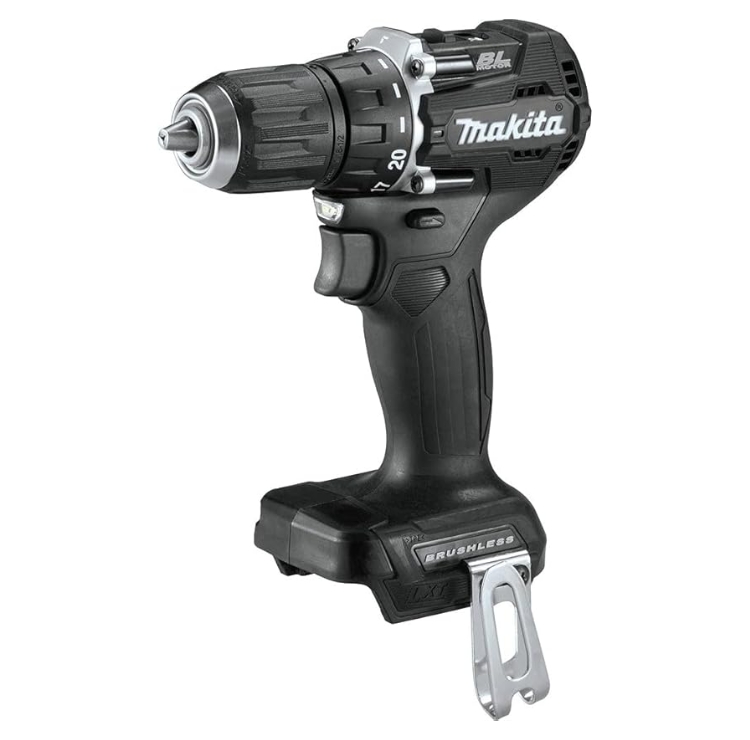
The Makita XFD15ZB is technically a sub-compact driver-drill, not a dedicated electric screwdriver — and that distinction matters for precision work. Its 1/4-inch hex chuck and 12V Max platform deliver more torque than most household tasks require, and the compact size is genuinely impressive for a battery-powered drill driver.
The main drawback is platform cost: the XFD15ZB is a bare tool, and Makita's 12V Max battery and charger are sold separately at a premium. Arriving without power is a significant friction point for a tool being compared in the electric screwdriver category.
The 2-speed transmission (0–450 / 0–1,500 RPM) provides far more speed range than delicate precision fastening requires, and without the fine, graduated clutch control of a true electric screwdriver, fine torque adjustment is approximate at best. For users already invested in Makita's 12V system, it is a logical addition. For anyone primarily seeking a precise, ready-to-use electric screwdriver, it is more expensive once the battery is included, more powerful than necessary, and less refined for delicate work.
Pros
- Sub-compact design for tight-space access
- Compatible with the Makita 12V Max battery ecosystem
- 2-speed transmission (0–450 / 0–1,500 RPM)
- Durable Makita construction and service network
- Wide 1/4-inch hex bit compatibility
Cons
- Bare tool — 12V Max battery and charger sold separately
- Total cost becomes significantly higher once the battery is included
- Heavier than dedicated electric screwdrivers
- More power than needed for precision fastening and electronics repair
What Is an Electric Screwdriver?
An electric screwdriver is a compact, battery-powered tool designed to drive screws with speed and precision that manual screwdrivers cannot match. Unlike full-sized drill drivers, electric screwdrivers are optimized for controlled torque delivery — making them ideal for furniture assembly, electronics repair, cabinet installation, and any job where precision matters more than raw power. Modern electric screwdrivers feature adjustable clutch systems that stop driving at the correct depth, preventing stripped screws and damaged surfaces across a wide range of materials.
Benefits of Electric Screwdrivers
- Eliminates wrist fatigue from long sessions of manual screwdriving
- Precise torque control prevents stripped screws and damaged materials
- Dramatically speeds up assembly and repair tasks
- Delivers consistent fastener depth across every screw
- Compact and portable — works anywhere a manual screwdriver does
What to Consider When Choosing an Electric Screwdriver
Clutch settings and torque range
The number of clutch settings determines how precisely you can match torque to the material. A 3-preset tool forces compromises across different tasks; a 21-setting system lets you dial in exact torque for wood, drywall, soft metals, and electronics without stripping screws or over-driving into soft materials.
Speed options
Single-speed electric screwdrivers force you to choose between being precise and being fast. A 2-speed tool gives you a low-speed mode for delicate work and a high-speed mode for driving fasteners quickly — essential versatility for mixed real-world use.
Work light quality
A work light is almost essential for screwdriving in cabinets, under furniture, and in tight spaces. Quality matters: a single-point LED casts a shadow directly in your work area, while a shadowless ring LED surrounds the bit and lets you see exactly where you are driving.
Charging convenience
USB-C charging means you can recharge with the same cable you use for your phone or laptop — no proprietary chargers to carry or misplace. Check real-world charge time and battery life under sustained use, not just the manufacturer's ideal-condition specification.
Total cost including battery
Several electric screwdrivers and driver-drills in this category are sold as bare tools, requiring separate battery purchases that add meaningfully to the total. Always verify whether the battery and charger are included before comparing prices — the list price alone does not reflect the full investment.
What to Avoid When Choosing an Electric Screwdriver

Too few torque settings
Tools with only 2–3 torque presets lack the granularity needed for the full range of materials you will work with. For anything more delicate than flat-pack furniture — electronics, trim work, soft metal — coarse presets will either strip screws or under-drive fasteners. Look for at least 15 clutch settings.
Single-point LED lights
A single-point LED mounted off-axis casts a harsh shadow directly across your drive path — exactly the area you need to see clearly. A ring-style LED that surrounds the bit tip eliminates the problem entirely.
Bare tools sold without batteries
Several screwdrivers and driver-drills in this category are listed at prices that exclude the required battery and charger. A tool that arrives without power is not usable at its listed price — verify battery inclusion before purchasing.
Ryan L – Home Improvement & Power Tools Specialist
With more than 14 years of hands-on experience evaluating power tools and home improvement equipment, Ryan specializes in testing drills, electric screwdrivers, impact drivers, and fastening tools for DIY enthusiasts, professionals, and homeowners. He has personally evaluated hundreds of tools for precision, durability, power, ease of use, and real-world performance across a wide range of materials and everyday projects.