We Tested 18 Gaming Keyboards Over 4 Weeks to Find the Best Performers for 2026
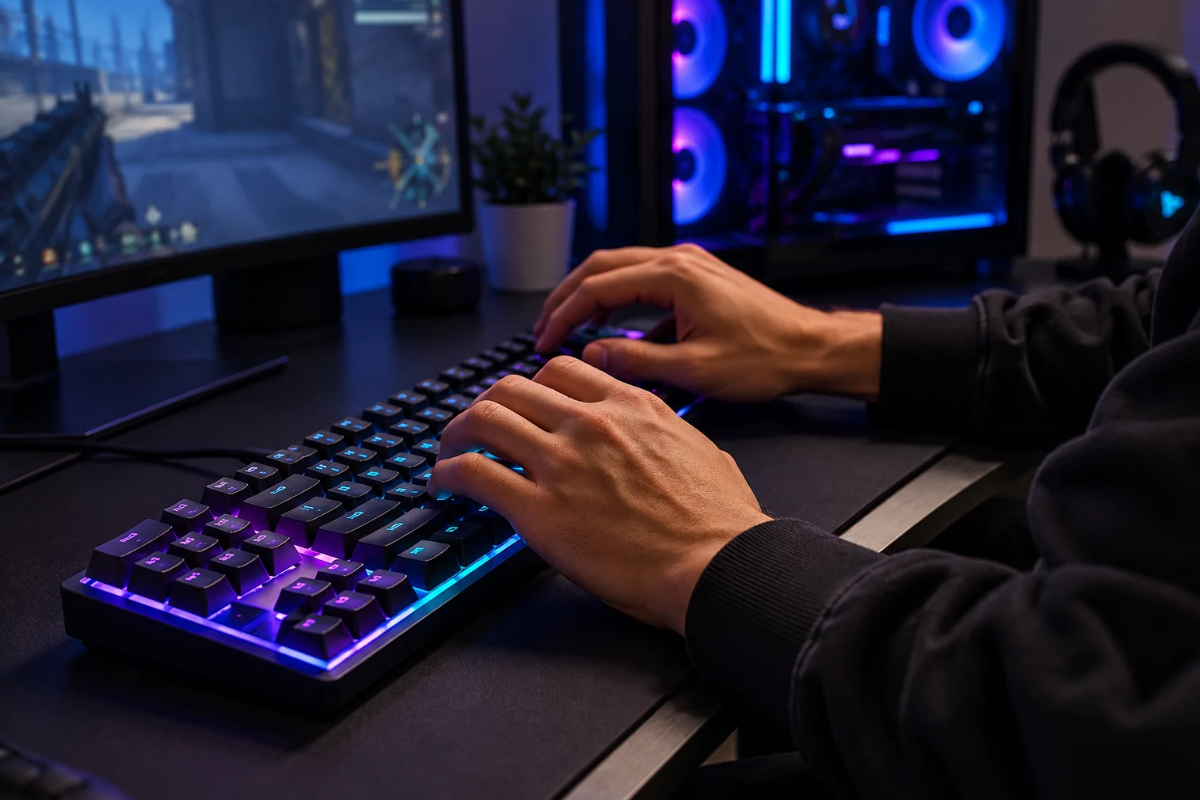
A gaming keyboard needs to do more than look good on your desk. Responsive switches, reliable inputs, and a comfortable layout all matter when you are tracking opponents, timing an ability, or settling into a long session.
With so many mechanical keyboards available in 2026, choosing one can be difficult. Some prioritize adjustable switches and fast polling rates; others offer wireless connectivity, familiar key layouts, or a more accessible price. The best fit depends on how you play and which features you will actually use.
We tested 18 gaming keyboards over four weeks and narrowed the field to five standout models. This review compares their response, customization, construction, and everyday usability to help you make a more informed choice.
The lineup covers magnetic, optical, and conventional mechanical switches, with features such as adjustable actuation, Rapid Trigger, and polling rates up to 8000Hz. We look at what each keyboard offers for competitive FPS games, MOBAs, and everyday typing, as well as the compromises that come with each design.
Below, you will find our ranked picks, their strengths and limitations, and a buying guide to help you choose a keyboard that suits your setup.
Response Time & Polling Rate
We assess how quickly inputs register, considering switch actuation, polling rates up to 8000Hz, and overall input latency during demanding gaming sessions.
Customization & Adjustability
We compare per-key actuation settings, programmable keys, Rapid Trigger options, and configuration tools to see how well each keyboard adapts to different playstyles.
Build Quality & Durability
We examine construction materials, PBT and ABS keycaps, switch durability, and overall sturdiness to assess how well each keyboard is suited to regular use.
Layout & Ergonomics
We consider keyboard size, desk space, typing comfort, and access to essential keys, including the trade-offs between compact 60% layouts and full-size designs.

Jordan Hayes – Gaming Technology Expert
Jordan Hayes is a gaming technology expert with over 12 years of experience testing gaming peripherals and mechanical keyboards, specializing in performance, build quality, and usability across competitive gaming and enthusiast communities.
1. Bivo HexaFlux Mechanical Keyboard
from Bivo
Overall Grade
A+
Rating
9.8/10
Overall Analysis
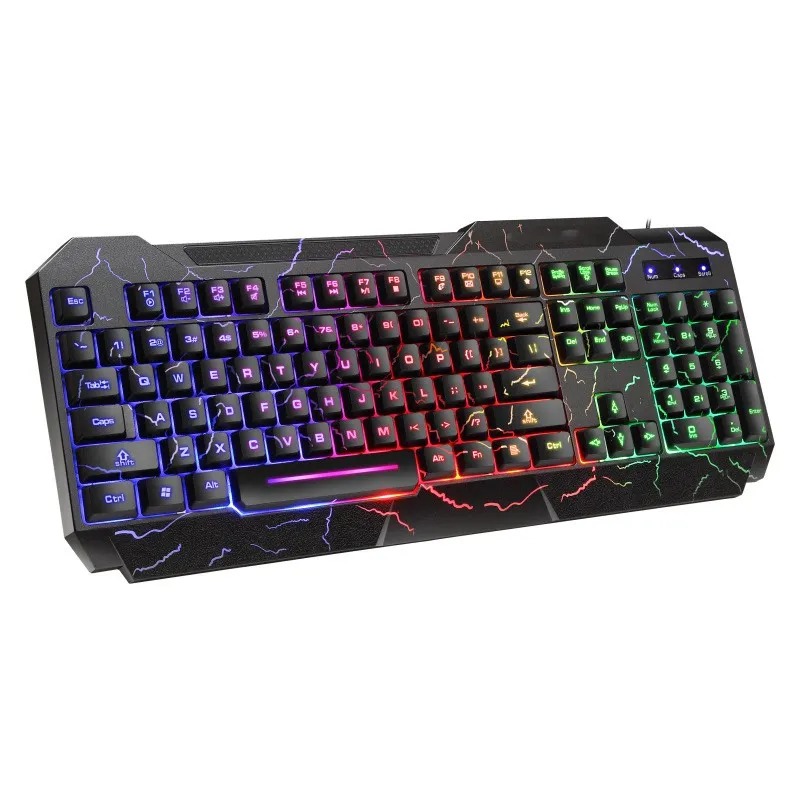
The Bivo HexaFlux Mechanical Keyboard takes our top spot for its combination of magnetic Hall effect switches, fine-tuned sensitivity, and extensive customization. Rapid Trigger settings as precise as 0.01mm give players detailed control over key activation and reset, particularly useful for repeated inputs in fast-paced FPS and MOBA games.
Its 8000Hz polling rate provides a 0.125ms polling interval, supported by a 128KHz scan rate. That polling interval is eight times shorter than at 1000Hz. The magnetic sensing system avoids traditional contact debounce delays, helping inputs register promptly during quick movements and combinations.
Actuation can be adjusted independently for each key from 0.1mm to 3.4mm in 0.01mm increments. You can set movement keys to register with a light touch and give ability keys a deeper threshold to reduce accidental presses. Snap Tap prioritizes the most recent input between two keys, while Dynamic Keystroke allows up to four actions to be assigned to different stages of a keystroke.
Side-printed, double-shot PBT keycaps combine wear resistance with light-transmissive legends. The compact 60% layout leaves more space for mouse movement, with layered commands providing access to additional functions. RGB lighting includes more than 20 modes and nine customizable colors, all managed through the web-based configuration tool.
The web driver keeps setup straightforward without requiring a software download, while still offering detailed control over sensitivity and lighting. Magnetic sensing also avoids the electrical contact wear associated with conventional switch contacts, supporting long-term use.
For players who want precise actuation control in a compact keyboard, the HexaFlux offers a strong balance of performance features and value. Its main appeal is the ability to tailor key behavior closely to individual games and preferences.
Pros
 Rapid Trigger sensitivity adjustable to 0.01mm
- 8000Hz polling rate with a 0.125ms polling interval
- Per-key actuation adjustable from 0.1mm to 3.4mm
- Snap Tap prioritizes the latest directional input
- Dynamic Keystroke supports up to four actions per key
- Magnetic Hall effect switches designed for long-term durability
- Double-shot PBT keycaps resist wear and fading
- Compact 60% layout leaves more room for mouse movement
- More than 20 customizable RGB lighting modes
- Web-based configuration without a software installation
Cons
 High demand can make stock availability inconsistent
Wrap-Up
The Bivo HexaFlux Mechanical Keyboard is our top pick for its adjustable magnetic switches, responsive input settings, and compact design. It is particularly well suited to gamers who want detailed control over actuation and repeated keypresses. Stock can be inconsistent, so availability is worth checking before you decide.
2. SteelSeries Apex Pro Mini Mechanical Keyboard
from SteelSeries
Overall Grade
B+
Rating
8.7/10
Overall Analysis
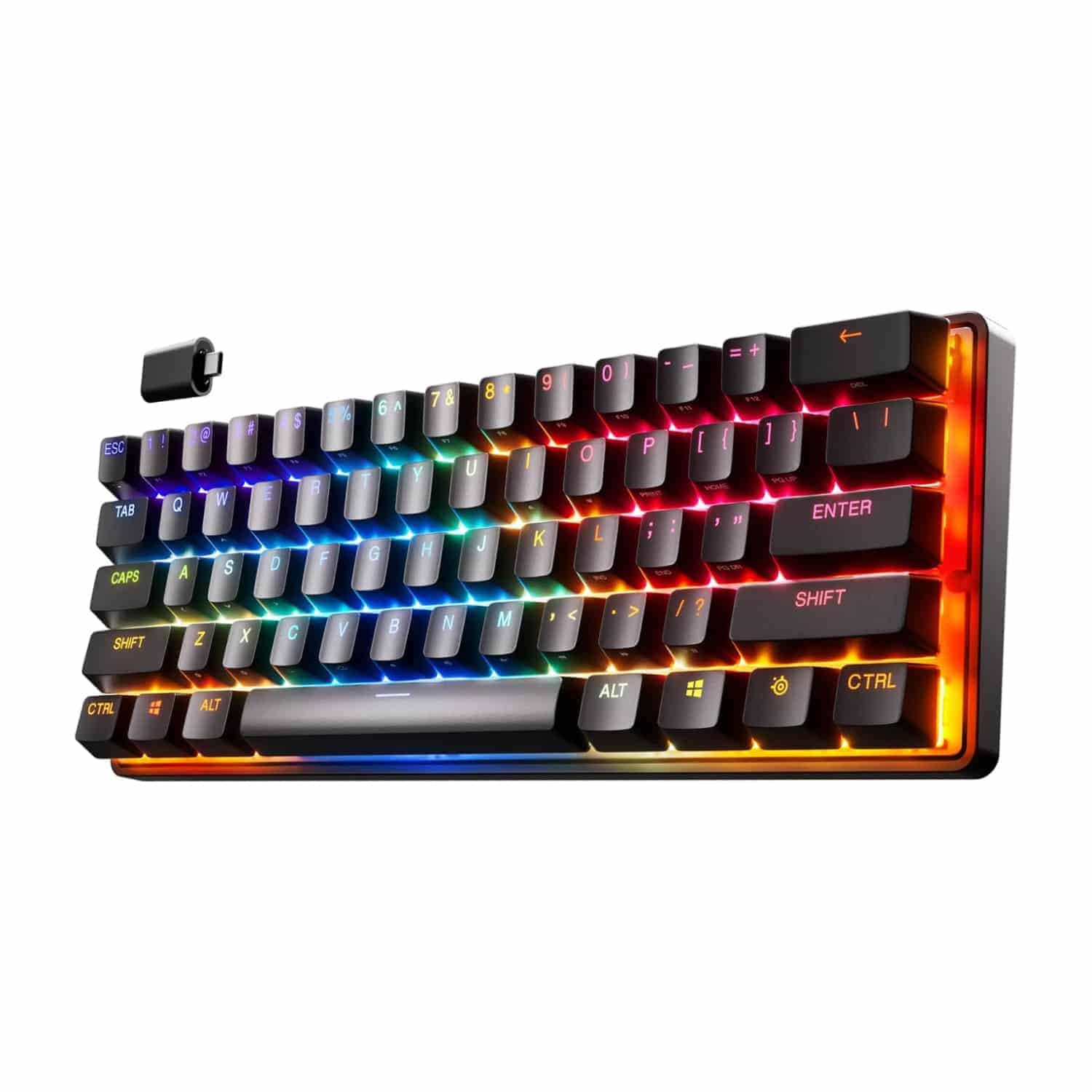
The SteelSeries Apex Pro Mini combines adjustable OmniPoint 2.0 HyperMagnetic switches with Quantum 2.0 Dual Wireless connectivity. Its stated performance figures include 20x faster actuation and 11x faster response than traditional mechanical keyboards, making responsiveness a central part of its appeal.
Rapid Trigger activates and resets keys according to their movement rather than relying solely on fixed thresholds. With 40 levels of per-key actuation between 0.1mm and 4.0mm, you can use lighter settings for movement keys and deeper presses for commands you want to avoid triggering accidentally.
The 2-in-1 Action Keys feature lets you assign two commands to a single key at different press depths—for example, walking with a light press and sprinting with a deeper one. An aluminum top plate adds rigidity, while the 60% layout uses layers to retain access to functions omitted from the compact key arrangement.
Connectivity options include 2.4GHz wireless, Bluetooth 5.0, and a detachable USB-C cable. That flexibility makes the Apex Pro Mini appealing for multi-device setups, but its premium price and more involved configuration are important considerations. It is a strong option for players who want wireless convenience alongside detailed switch adjustment.
Pros
- OmniPoint 2.0 switches with a stated 20x faster actuation speed
- Rapid Trigger adjusts activation and reset as keys move
- 40 per-key actuation settings across a 0.1–4.0mm range
- 2-in-1 Action Keys assign two actions to one key
- Quantum 2.0 Dual Wireless connectivity
- Aluminum construction adds strength and durability
- Compact 60% layout with layered access to additional functions
Cons
- Priced at the premium end of the market
- Advanced settings take time to learn and configure
3. Razer Huntsman V2 Analog Mechanical Keyboard
from Razer
Overall Grade
B
Rating
8.1/10
Overall Analysis
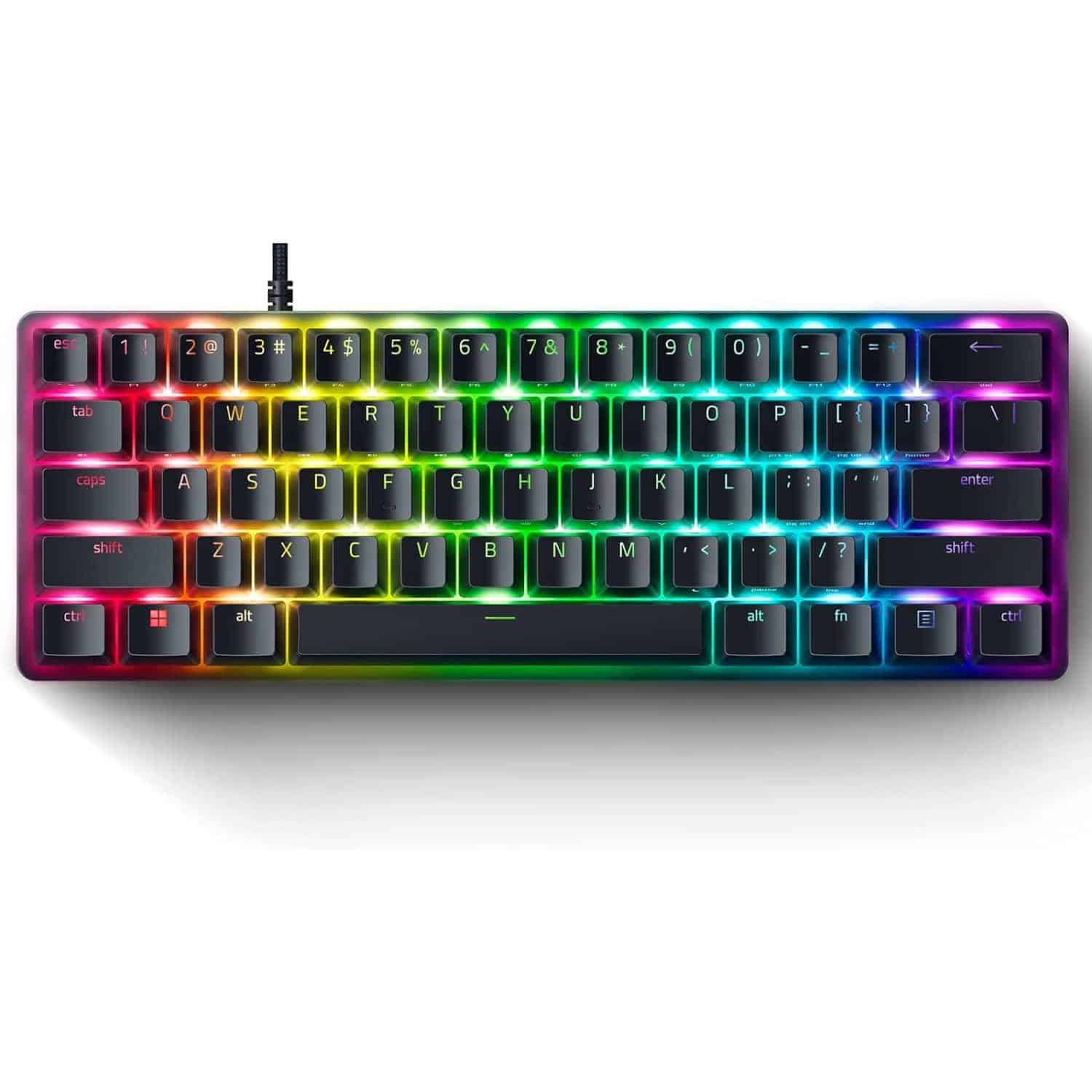
The Razer Huntsman V2 Analog pairs optical switches with adjustable actuation and analog input. You can tailor activation points to your preferred key feel or use partial presses for more graduated control in games that support analog keyboard input.
Rapid Trigger allows keys to reset and register again as they move, supporting quick repeated presses and combinations. Double-shot PBT keycaps resist wear and surface shine, while side-printed secondary functions make additional commands easier to identify.
Onboard memory holds five keyboard profiles, and Chroma RGB provides preset effects and integration with other compatible gaming devices. Aluminum construction gives the keyboard a sturdy, matte finish, while the detachable Type-C cable and latch mechanism help keep the connection secure.
The main trade-offs are its reliance on Razer Synapse for full customization, a larger footprint than 60% alternatives, and limited game support for analog input. For users who value optical switches, profile storage, and the Chroma ecosystem, it remains a capable option with a broad feature set.
Pros
- Analog optical switches with light-based actuation
- Rapid Trigger supports quick resets and repeated presses
- Double-shot PBT keycaps resist wear and fading
- Onboard memory stores five customized profiles
- Chroma RGB integration with preset lighting effects
- Aluminum construction provides a sturdy finish
Cons
- Razer Synapse is needed to access the full feature set
- Larger footprint is less portable than compact alternatives
- Analog input support varies by game
4. Corsair K65 RGB MINI Mechanical Keyboard
from Corsair
Overall Grade
C+
Rating
7.5/10
Overall Analysis
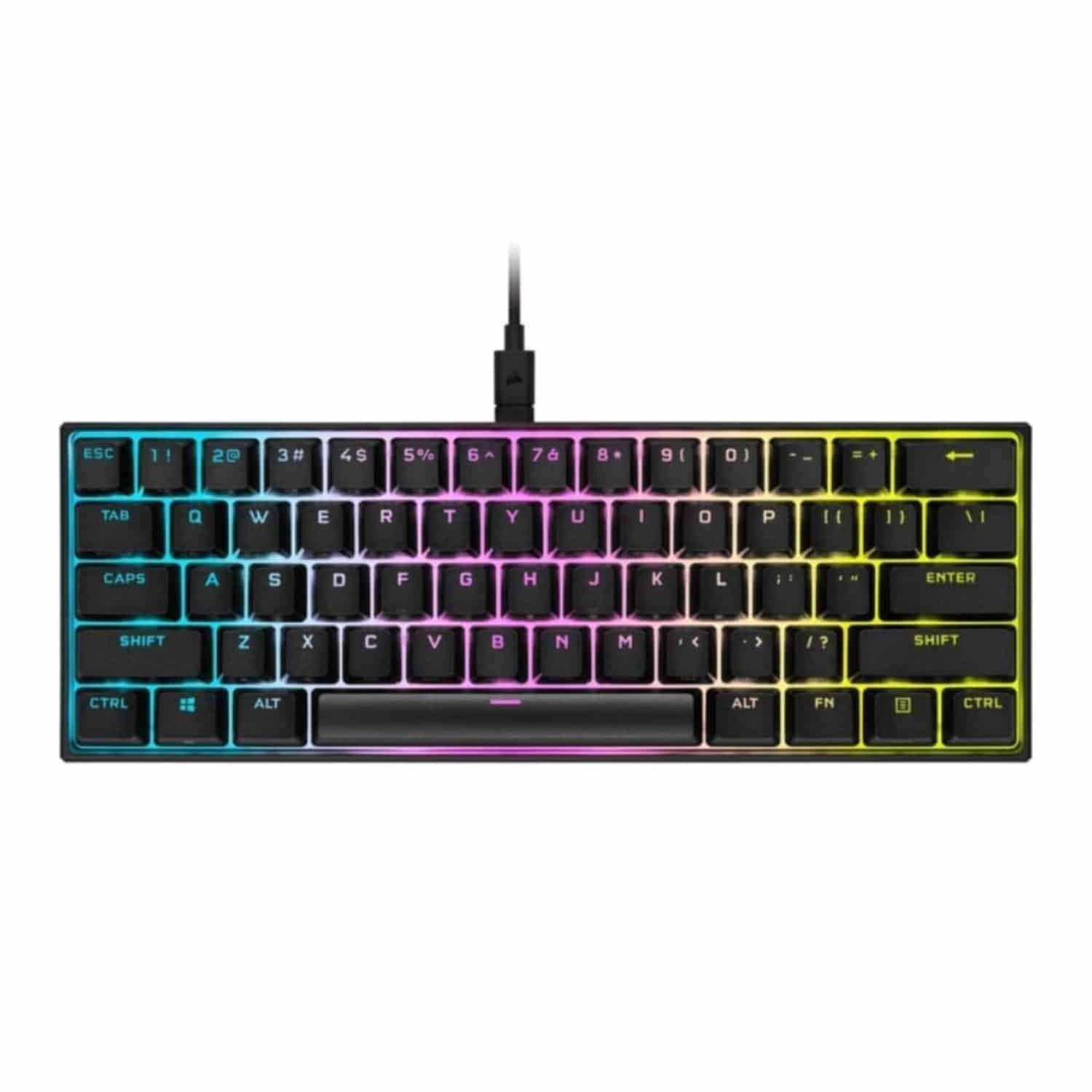
The Corsair K65 RGB MINI puts high-rate polling and conventional mechanical switches into a compact 60% layout. Corsair's AXON Hyper-Processing Technology supports 8000Hz polling, sending input updates up to eight times as frequently as a 1000Hz keyboard.
CHERRY MX SPEED RGB Silver switches register at a 1.2mm actuation distance, favoring short, quick presses. Corsair pairs these switches with AXON technology for a stated response improvement of up to four times over standard mechanical keyboards. The 1.5mm-thick, double-shot PBT keycaps add rigidity and resist wear, fading, and shine.
Per-key RGB lighting, an optional radiant spacebar, and a Corsair logo key provide ways to personalize the appearance. A standard bottom row makes compatible replacement keycaps easier to find. The small footprint also leaves more room for the wider mouse movements common in FPS games.
Unlike magnetic alternatives, its Cherry MX switches have fixed actuation points. You will also need to adapt to layered commands in place of dedicated arrow keys and a function row. The K65 RGB MINI is best suited to players who prefer familiar mechanical switches and fast polling in a space-saving design.
Pros
- AXON Hyper-Processing supports 8000Hz polling
- Cherry MX Speed switches actuate at 1.2mm
- 1.5mm-thick double-shot PBT keycaps
- Compact 60% layout frees up desk space
- Customizable per-key RGB backlighting
- Standard bottom row makes keycap replacement easier
Cons
- Fixed actuation lacks the adjustment offered by magnetic switches
- The 60% layout may take time to learn
- No dedicated arrow keys or function row
- Customization is more limited than on some competing models
5. RK ROYAL KLUDGE RK61 Mechanical Keyboard
from RK ROYAL KLUDGE
Overall Grade
C
Rating
7.1/10
Overall Analysis
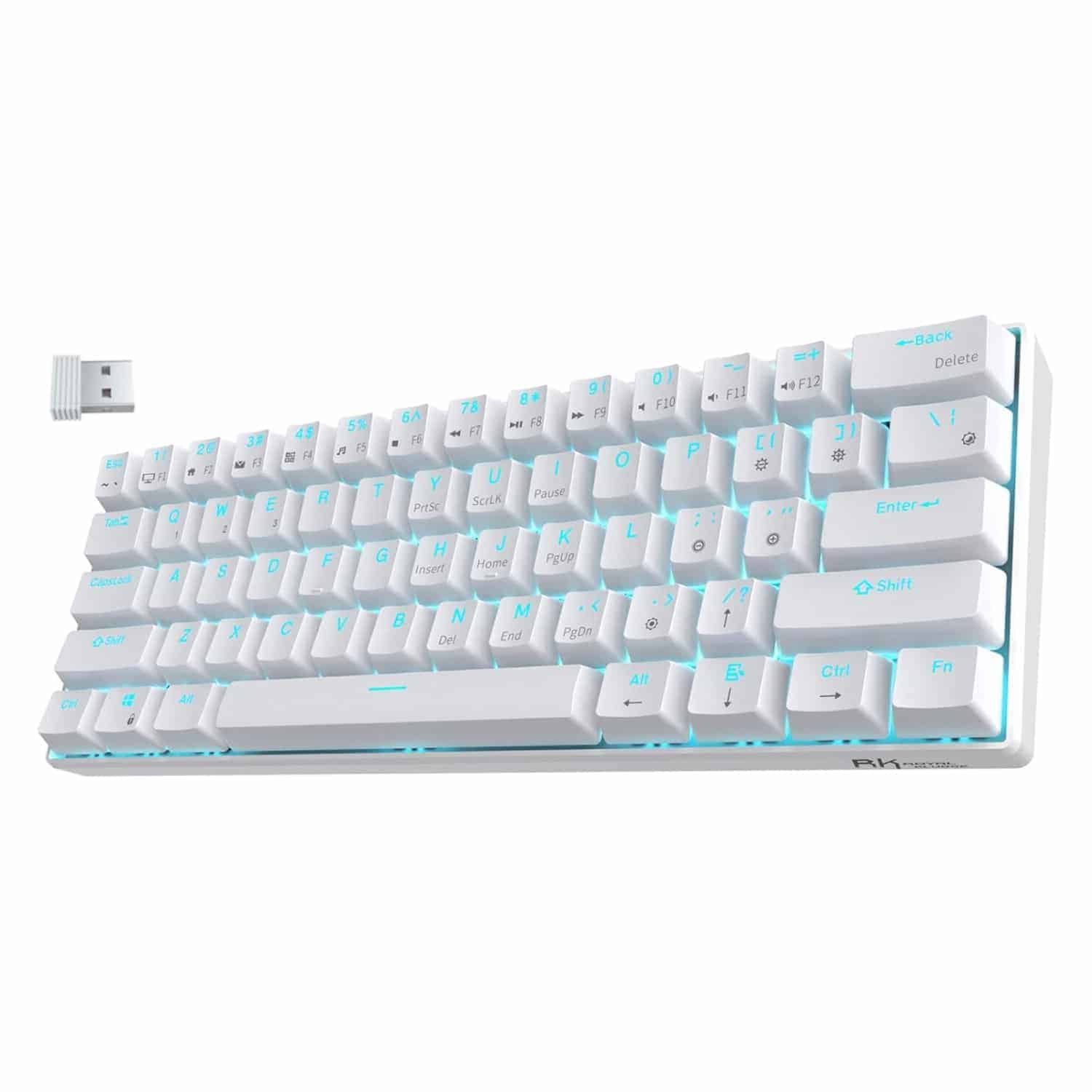
The RK ROYAL KLUDGE RK61 offers an accessible route into mechanical keyboards, with Bluetooth 5.0, 2.4GHz wireless, and USB-C wired connectivity. These options make it useful for switching between compatible smartphones, laptops, and tablets without paying for a premium gaming model.
Its hot-swappable PCB accepts both 3-pin and 5-pin switches, allowing you to change the typing feel without soldering. The 60% layout omits the number pad to leave more room for mouse movement, with layered commands providing access to additional functions.
Battery life is approximately 13 hours of continuous use at the minimum backlight setting, with up to 360 hours of standby. Although the LEDs are single-color rather than full RGB, there are 17 dynamic lighting modes, with brightness and speed adjusted through function-key combinations.
The RK61 does not offer the magnetic switches, adjustable actuation, or high polling rates of the more expensive picks. Its plastic construction and simpler software also reflect its entry-level positioning. Even so, hot-swap support, wireless flexibility, and programmable settings make it a practical choice for budget-conscious gamers and newcomers who want to experiment with mechanical switches.
Pros
- Bluetooth 5.0, 2.4GHz wireless, and USB-C connectivity
- Hot-swappable PCB accepts 3-pin and 5-pin switches
- Compact 60% layout leaves more room on the desk
- Approximately 13 hours of battery life and 360 hours of standby
- 17 dynamic backlighting modes with adjustable settings
Cons
- Single-color backlighting rather than full RGB
- Lower polling rate than the premium options
- Basic plastic construction
- Fewer software features than higher-end models
- No Rapid Trigger or adjustable actuation
What Is a Mechanical Keyboard?
Mechanical keyboards use an individual switch beneath each key rather than the shared rubber-dome membrane found in many standard keyboards. Conventional mechanical switches use a spring-loaded mechanism, with a linear, tactile, or clicky feel depending on the switch type.
Many mechanical switches are rated for 50–100 million keystrokes. Their consistent feel and range of switch options make them popular for gaming and typing. Some newer gaming models use magnetic Hall effect sensors or optical sensing, with adjustable actuation and Rapid Trigger settings available on supported keyboards.
Other features include analog input that detects partial presses, polling rates up to 8000Hz, and hot-swappable circuit boards that let you replace compatible switches without soldering. These features vary by model, so it is worth checking which ones a particular keyboard actually includes.
Gamers, programmers, writers, and keyboard enthusiasts often choose mechanical keyboards for their durability and customization. The right switch feel and layout can make extended use more comfortable, but preferences differ—especially when balancing gaming response with everyday typing.
Benefits of Mechanical Keyboards
- Responsive Inputs: Polling rates up to 8000Hz and magnetic sensing can provide sub-millisecond input reporting for fast-paced gaming.
- Adjustable Actuation: Supported models let you set activation distances between 0.1mm and 4.0mm, using lighter movement keys and deeper thresholds for other commands.
- Long-Term Durability: Conventional mechanical switches are often rated for 50–100 million keystrokes, while magnetic sensing avoids wear at electrical contacts.
- Consistent Typing Feel: A choice of switch types and repeatable actuation can help you find a typing experience that suits your comfort and accuracy preferences.
- Rapid Trigger: Supported keyboards reset and reactivate keys according to movement rather than fixed points, helping with repeated inputs and quick combinations.
- Hot-Swap Flexibility: Compatible hot-swappable models let you change switches without soldering to explore different feels and sound profiles.
- More Mouse Space: Compact 60% layouts leave additional room for mouse movement while retaining extra commands through key layers.
- Customizable Lighting: Per-key RGB and dynamic effects let you coordinate lighting with your setup; available modes and colors depend on the model.
What to Consider When Choosing a Gaming Keyboard
- Polling Rate & Response: Compare polling rates and switch behavior for the games you play. Up to 8000Hz is available on performance-focused models, while 1000Hz remains suitable for casual gaming and typing.
- Switch Type & Actuation: Decide whether you want adjustable magnetic switches, analog optical input, or the fixed, familiar feel of conventional switches such as Cherry MX.
- Keyboard Layout: A 60% keyboard gives your mouse more space, but a larger layout may suit you better if you regularly use dedicated arrow keys, function keys, or a number pad.
- Connectivity: Consider Bluetooth or 2.4GHz wireless for flexible setups, or a wired connection if you prefer a direct connection without battery management.
- Configuration Tools: Look at how easily you can program keys, set macros, adjust supported actuation settings, and manage lighting through software or a web driver.
- Construction & Keycaps: Aluminum construction can add rigidity, while PBT keycaps resist wear and shine. Consider how these materials affect the feel and durability you want.
- Budget & Priorities: Focus on features you will use. Magnetic switches and Rapid Trigger often cost more, while entry-level hot-swappable models can offer a flexible starting point.
Mistakes to Avoid When Choosing a Gaming Keyboard
 Buying the Wrong Switch Type: Fixed-actuation switches may not suit you if per-key sensitivity adjustment is a priority. Check the available settings before buying.
- Overlooking Response Specifications: Compare polling rates and input features rather than relying on gaming branding alone, particularly if responsiveness is central to your choice.
- Choosing a Layout That Disrupts Your Workflow: A 60% keyboard can be inconvenient if you depend on dedicated arrows, a function row, or a number pad throughout the day.
- Ignoring Keycap Materials: Consider wear resistance and legend construction as well as appearance. PBT generally resists shine better than ABS, though quality varies.
- Underestimating Setup Requirements: Complex or limited software can make customization frustrating. Check whether the configuration tools support the settings you need.
Jordan Hayes – Gaming Technology Expert
Jordan Hayes is a gaming technology expert with over 12 years of experience testing gaming peripherals and mechanical keyboards, specializing in performance, build quality, and usability across competitive gaming and enthusiast communities.