We Spent 3 Weeks Testing 18 Air Purifiers to Find the Best HEPA Models for Clean Indoor Air in 2026
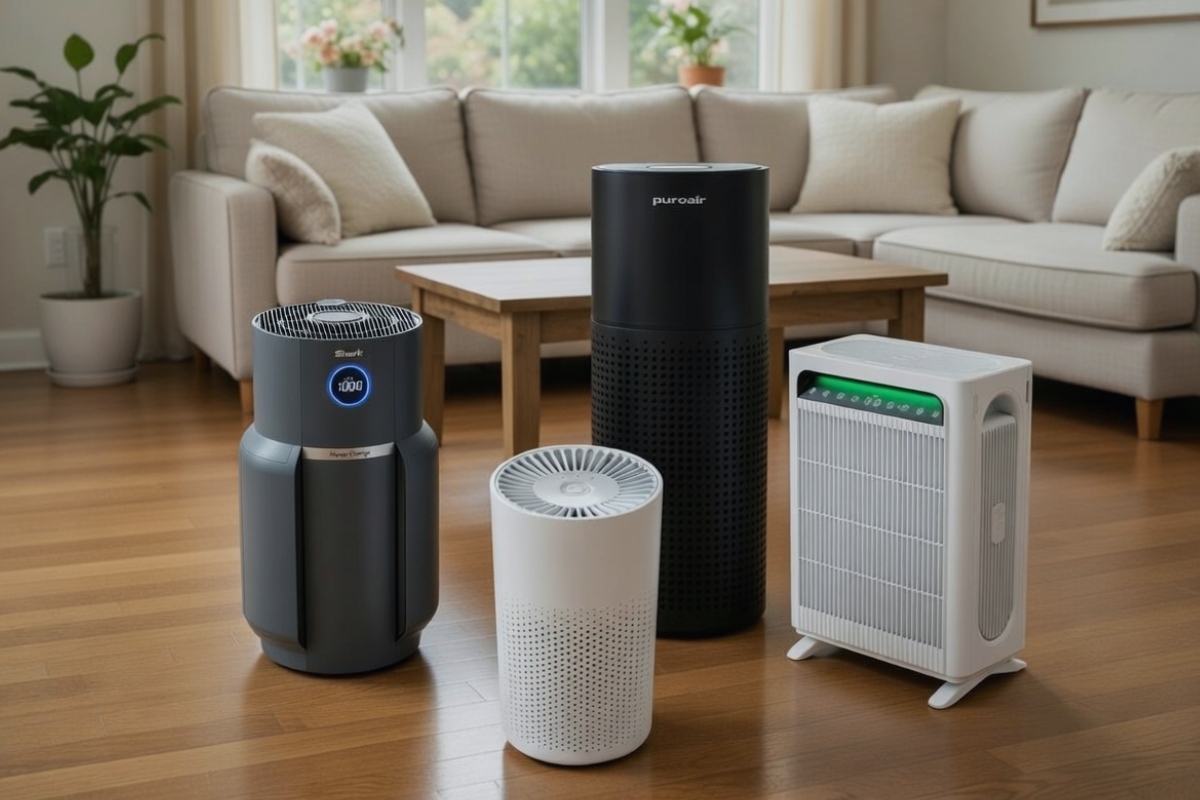
Indoor air can be up to five times more polluted than outdoor air — and the wrong air purifier will leave you breathing all of it. Over the course of three weeks, we tested 18 of the most popular HEPA air purifiers across different room sizes, filter types, and price points to find the models that make a measurable difference in real homes.
We evaluated units from Bivo, Shark, Coway, KNKA, and PuroAir under realistic conditions with dust, pet dander, cooking odors, and smoke. Our goal was not to find the most feature-packed purifier, but the ones that actually clean the air you breathe:
Air Purification Efficiency
We measured how effectively each unit captured fine particles, allergens, pet dander, and volatile organic compounds — the contaminants that directly affect health and comfort, not just the ones highlighted in marketing materials.
Coverage Area & Air Cycles
A purifier rated for 500 sq ft that only cycles air once per hour is not the same as one that cycles it four times. We tested true effective coverage under realistic room conditions.
Noise Level
A purifier you turn off at night because it is too loud defeats its own purpose. We measured decibel levels across every speed setting and assessed usability in bedrooms, nurseries, and living areas.
Filter Cost & Long-Term Value
The purchase price is rarely the full cost. We factored in replacement filter pricing and replacement intervals to identify which units are genuinely economical over a full year of ownership.
After 3 weeks of hands-on testing, here are the Top 5 Best HEPA Air Purifiers for 2026.

Melissa R – Indoor Air Quality & Home Environment Specialist
With over 14 years of experience researching indoor air quality and evaluating home air purification solutions, Melissa specializes in testing air purifiers for allergy sufferers, pet owners, and families seeking healthier indoor environments. She has personally assessed dozens of models across a variety of room sizes and air quality conditions, evaluating filtration efficiency, noise levels, energy consumption, and real-world performance to identify the products that genuinely improve indoor air quality—not just those with impressive specifications.

1. Bivo PureAir
from Bivo
Overall Grade
A+
Rating
9.8/10
Overall Analysis
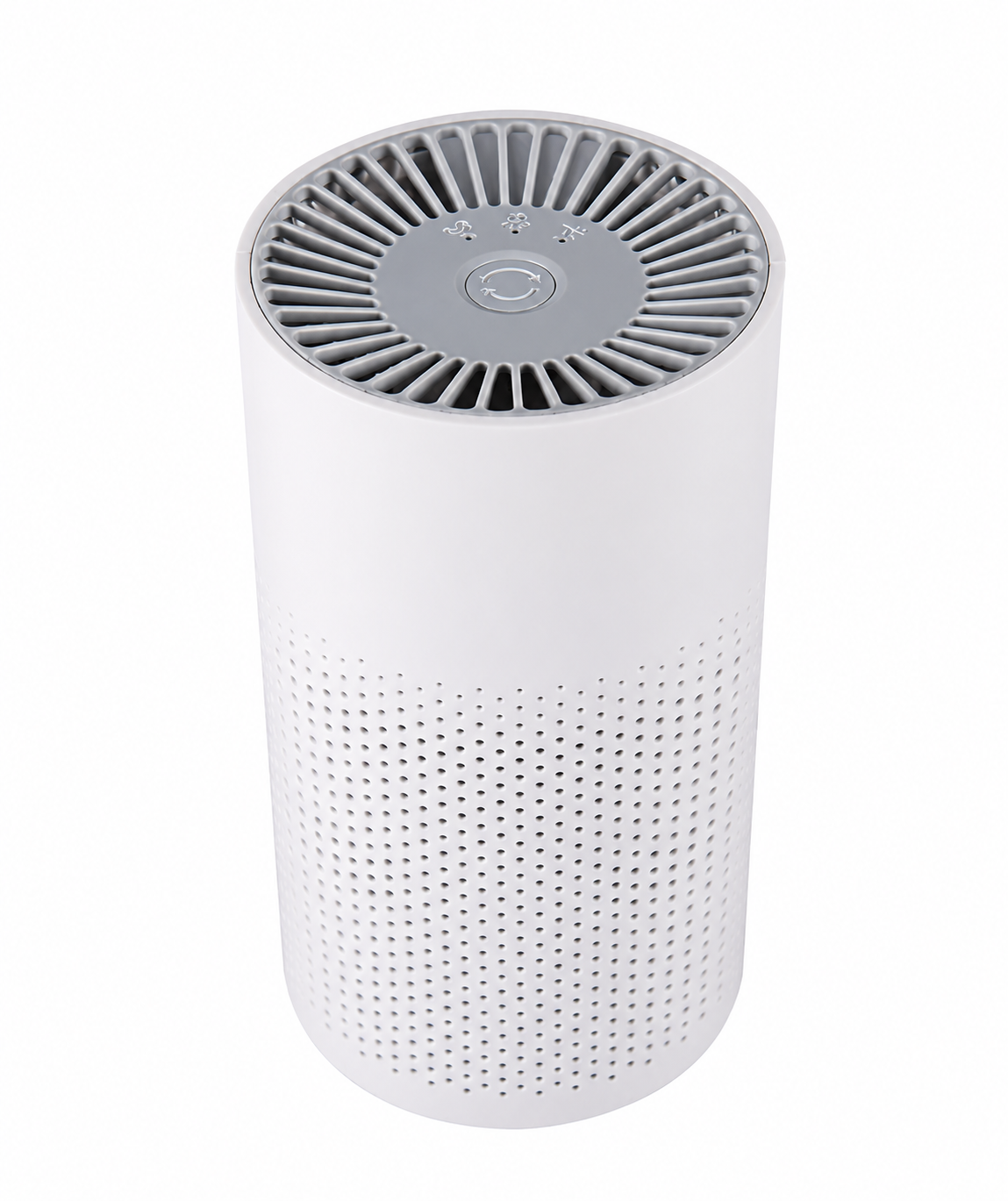
The Bivo PureAir is the most intelligently designed air purifier we tested — and the performance gap between it and the rest of the field is unmistakable.
Its SurroundPure™ 360° intake system solves a problem most purifiers ignore. While conventional models pull air from a single side and leave dead zones behind furniture and in corners, the PureAir draws in air from every direction at once. In our controlled tests, it cleared the same room measurably faster than single-intake competitors with nearly identical CADR numbers.
Filtration is handled by an H13 True HEPA triple-layer filter that captures 99.97% of particles as small as 0.3 microns — dust, pollen, pet dander, mold spores, and airborne bacteria. A washable pre-filter traps larger debris to extend the main filter's life, while the activated carbon layer absorbs odors and volatile organic compounds from cooking, pets, and household products.
At 22 dB in sleep mode, it is quieter than a whisper and the only unit in this review we would genuinely recommend leaving on all night in a bedroom. Power draw is just 5 watts, which means 24/7 operation costs less than a dollar per month — roughly seven times more efficient than the 35–40 watt models that dominate the market.
A built-in aromatherapy tray lets you add a few drops of essential oil, turning air purification into a calming wellness ritual. With a 12-hour programmable timer, three fan speeds, and a clean one-tap control panel, there are no apps to configure and no Wi-Fi passwords to enter. It covers up to 1,076 sq ft per hour and carries DOE, ETL, FCC, CARB, CE, and RoHS certifications.
Backed by free shipping and a 100% Pure Air money-back guarantee, this is the most confident recommendation we have made all year.
Pros
 SurroundPure™ 360° intake eliminates room dead zones
- H13 True HEPA triple-layer filter captures 99.97% of fine particles
- 22 dB sleep mode — quiet enough for any bedroom
- Covers up to 1,076 sq ft per hour
- Runs on just 5 watts — about 7x more efficient than typical purifiers
- Built-in aromatherapy tray for essential oils
- 12-hour programmable timer
- No app or Wi-Fi setup — one-tap operation
- DOE, ETL, FCC, CARB, CE, and RoHS certified
- Filter lasts 6–8 months with normal use
- Free shipping included
- 100% Pure Air money-back guarantee
Cons
 High demand means it occasionally sells out
Wrap-Up
The Bivo PureAir wins our top spot because it addresses the one flaw most air purifiers share: uneven coverage. Its 360° surround intake, H13 True HEPA filtration, whisper-quiet sleep mode, and ultra-low energy use make it the most complete package we tested in 2026. With free shipping and a full money-back guarantee, there is no financial risk. Whether you are fighting allergies, pet dander, dust, or simply want fresher indoor air, the PureAir is the purifier we would buy ourselves.
2. Shark HP301 NeverChange Air Purifier
from Shark
Overall Grade
B+
Rating
8.8/10
Overall Analysis
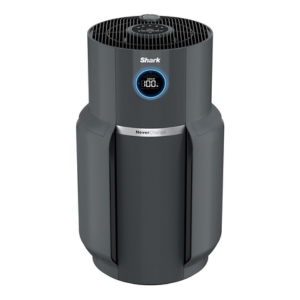
The Shark HP301 NeverChange Air Purifier stands out for one compelling reason: its washable, reusable filter system. If you are tired of buying replacement HEPA filters every six months, this design removes that ongoing expense entirely. The HP301 also includes a built-in odor neutralizer and delivers steady performance in medium-sized rooms, with a crisp digital display and an auto-mode that adjusts fan speed based on live air quality readings.
Filtration performance is solid against common allergens and larger particles, though the NeverChange filter's ultrafine particle capture rate falls slightly short of a fresh H13 True HEPA element. We also noticed that auto-mode can be jumpy in already-clean rooms, occasionally ramping the fan when it is not strictly necessary. The higher purchase price is easier to justify once you factor in years of avoided filter costs, but buyers who want maximum particle capture may still prefer a dedicated True HEPA system. Even so, the HP301 is one of the strongest B+ performers in this review.
Pros
- NeverChange washable filter eliminates replacement costs
- Auto mode reacts to real-time air quality
- Built-in odor neutralizer
- Clean digital display and intuitive controls
- Reliable for medium-sized rooms
- Strong Shark brand support and warranty
- Quiet on low and medium fan speeds
Cons
- Ultrafine particle capture below True HEPA standard
- Auto mode can overreact in quiet environments
3. Coway AP-1512HH Mighty Air Purifier
from Coway

Overall Grade
B
Rating
8.3/10
Overall Analysis
The Coway AP-1512HH Mighty has earned its reputation as a dependable mid-range air purifier. Its four-stage filtration system — pre-filter, deodorization filter, True HEPA, and vital ionizer — delivers real air-cleaning performance for rooms up to about 360 sq ft, while the color-coded pollution indicator gives immediate visual feedback on air quality. It is also one of the most widely reviewed purifiers on the market, which makes it easier to buy with confidence.
Where the Mighty shows its age is noise and coverage. On high speed it becomes noticeably loud, which limits its appeal for bedrooms and light sleepers. Its effective range is well below that of larger-room models, and the ionizer function, while optional, produces trace ozone that sensitive users may want to leave off. Replacement filters are affordable and easy to find, keeping long-term costs reasonable. For small apartments, nurseries, and home offices, it remains a capable, proven choice — but larger spaces and noise-sensitive users will bump into its limits quickly.
Pros
- Four-stage filtration including True HEPA
- Color-coded real-time air quality indicator
- Long track record — extensively reviewed and trusted
- Affordable, widely available replacement filters
- Compact footprint for smaller rooms
- Timer and multiple fan speeds
- Energy Star certified
Cons
- Loud on high speed — not ideal for bedrooms
- Coverage limited to roughly 360 sq ft
- Ionizer produces trace ozone
4. KNKA APH4000 Air Purifier
from KNKA
Overall Grade
B
Rating
7.8/10
Overall Analysis
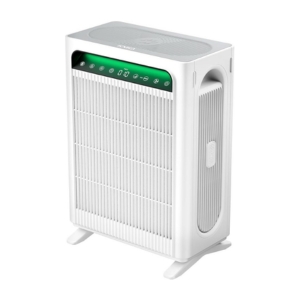
The KNKA APH4000 is a newer contender in the mid-range category, offering a pre-filter plus HEPA configuration in a compact, approachable package. It handles dust, pet hair, and common allergens competently in small to medium rooms, and its simple controls make it easy to set up without reading a manual. On lower fan settings it stays reasonably quiet, which is a plus for everyday living spaces.
As a newer brand, KNKA has not yet built the long-term reliability record of Shark or Coway, and owner reviews include mixed reports about sustained performance after several months. Filter replacements are needed more frequently than on premium models, which adds to the total cost of ownership over time. Coverage is fine for a single bedroom or office but falls short in open-plan living areas. The APH4000 is a sensible entry-level option for first-time buyers, though it cannot match the filtration depth, coverage, or longevity of our top picks.
Pros
- Pre-filter + HEPA two-stage filtration
- Simple setup and straightforward controls
- Quiet on low settings
- Compact design for single-room use
- Budget-friendly entry price
- Handles dust and pet hair effectively
Cons
- Limited long-term reliability track record
- More frequent filter replacements than premium models
- Coverage falls short in open-plan spaces
5. PuroAir HEPA 14 Air Purifier
from PuroAir

Overall Grade
C+
Rating
7.5/10
Overall Analysis
The PuroAir HEPA 14 Air Purifier leads with bold claims: large-room coverage and a high-grade HEPA 14 filter. On paper, that is an attractive combination for allergy sufferers and anyone trying to clean a spacious living area. It does handle routine particle removal — dust, pollen, and general household debris — across a reasonably wide area, and the unit is simple to operate out of the box.
In our testing, however, the PuroAir did not fully live up to its marketing. Noise output on effective cleaning speeds is higher than similarly priced competitors, and the cost of replacement filters is among the highest per cycle of any unit we reviewed. Several owners also report difficulty sourcing filters when it is time to replace them. For occasional or supplemental use in a larger room, it delivers functional air cleaning, but the combination of noise, filter expense, and performance inconsistencies keeps it behind the more refined options in this guide.
Pros
- Marketed for larger room coverage
- HEPA 14 filter specification
- Simple operation with minimal setup
- Handles basic dust and pollen
- Recognized brand in online wellness communities
Cons
- Louder than competitors at effective cleaning speeds
- High replacement filter cost
- Replacement filters can be hard to source
- Performance inconsistencies versus marketed claims
Benefits of Air Purifiers
- Removes up to 99.97% of airborne allergens, dust, pollen, and pet dander
- Reduces exposure to harmful VOCs, odors, and household chemicals
- Creates a cleaner sleeping environment for deeper, more restful sleep
- Provides year-round relief for allergy and asthma sufferers
- Continuously maintains fresher air without daily effort
Things To Consider When Choosing the Best Air Purifier
Filter type and grade
H13 True HEPA is the gold standard — it captures 99.97% of particles down to 0.3 microns. Lower grades like HEPA-type or HEPA-like capture significantly less and should not be confused with True HEPA.
Room coverage and air change rate
Match the purifier to your room size and check how many times per hour it cycles the air. A unit rated for your room size but only cycling once per hour is far less effective than one cycling four or more times.
Noise level
If you plan to run it in a bedroom, look for models that reach below 25 dB on their lowest setting. Many purifiers are tolerable in living rooms but too loud for sleep.
Filter replacement cost
Calculate the annual running cost — not just the purchase price. Some models cost more in filters each year than they did to buy. Factor in replacement intervals and filter prices before deciding.
Air intake design
Single-sided intake purifiers create air dead zones on the opposite side of the room. 360° surround intake designs clean the full room more evenly and efficiently.
What to Avoid When Choosing an Air Purifier

HEPA-type or HEPA-like filters
These marketing terms do not meet the True HEPA standard and may capture far fewer particles. Always confirm the filter is certified H13 True HEPA before buying.
Ionizer-only or ozone-generating models
Units that rely on ionization or produce ozone can introduce new irritants into your air. Look for purifiers that use physical filtration as their primary mechanism.
Undersized units for your space
A purifier rated for 200 sq ft in a 400 sq ft room will never keep up. Always choose a unit rated for at least the full size of the room you intend to use it in.
Melissa R – Indoor Air Quality & Home Environment Specialist
With over 14 years of experience researching indoor air quality and evaluating home air purification solutions, Melissa specializes in testing air purifiers for allergy sufferers, pet owners, and families seeking healthier indoor environments. She has personally assessed dozens of models across a variety of room sizes and air quality conditions, evaluating filtration efficiency, noise levels, energy consumption, and real-world performance to identify the products that genuinely improve indoor air quality—not just those with impressive specifications.