We Spent 3 Weeks Testing 9 Home Security Cameras to Find the Best for 2026
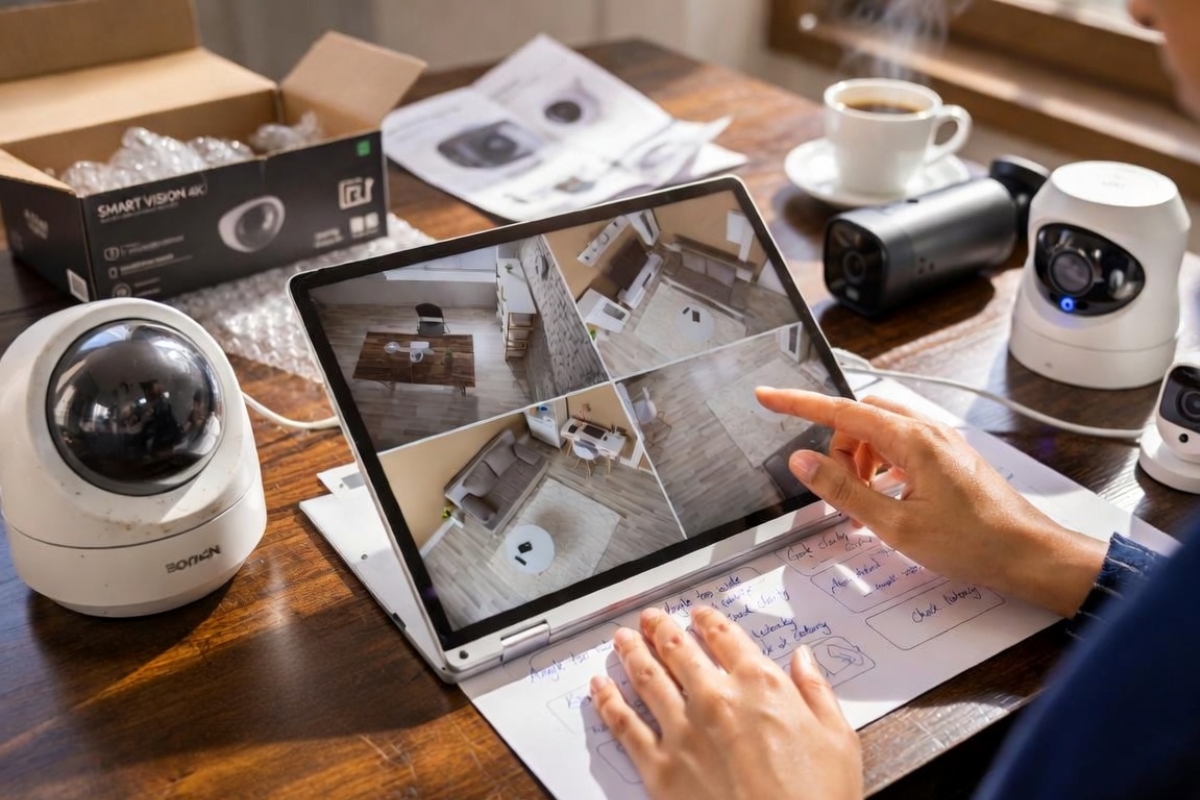
After testing home security cameras with night vision too grainy to identify a face, motion alerts triggered by every passing car and blowing leaf, apps that stopped recording mid-event, and mounts that cracked after two weeks of rain, we set out to find the best home security camera for 2026. Spec sheets and product listings were not enough — we ran 9 models through 3 weeks of real-world outdoor installation and daily monitoring to find the cameras that actually deliver the protection they promise.
We tested 9 home security cameras across a range of price points, including models from Bivo, SimpliSafe, Arlo, ANSQUE, and REOLINK. The top five were evaluated on the following criteria:
Video Resolution & Night Vision
We recorded identical scenes on every camera and assessed face-recognition clarity, license-plate readability at 15 feet, and color accuracy. Night vision was tested in full darkness, low ambient light, and with the built-in spotlight active — measuring whether footage was usable for identification, not just presence detection.
Motion Detection & Alert Accuracy
We triggered events with real people, vehicles, animals, and environmental movement including wind-blown foliage, passing headlights, and rain. Every alert over the three-week test was logged so we could calculate each camera's false-alarm rate — the share of alerts caused by non-human, non-vehicle movement.
Weather Resistance & Installation
All cameras were mounted outdoors on a north-facing wall and exposed to rain, temperature swings between 28°F and 91°F, direct afternoon sun, and wind-driven moisture. We checked whether image quality and Wi-Fi connectivity held up, and how easily a non-technical homeowner could complete the installation.
Smart Home Integration & App Experience
Each camera was connected to Amazon Alexa and Google Home to test live-view reliability and voice control. Apps were judged on notification speed, playback reliability, event-timeline organization, two-way audio quality, and how much functionality sits behind a paid subscription.
After 3 weeks of hands-on testing and comparison, here are the Top 5 Best Home Security Cameras for 2026.

Daniel M – Home Security & Smart Surveillance Specialist
With more than 11 years of experience reviewing home security systems and smart surveillance technology, Daniel specializes in wireless outdoor cameras, AI-powered motion detection, and real-world security testing. He evaluates security cameras for video quality, night vision, motion-detection accuracy, alert reliability, installation, and app usability — looking beyond manufacturer claims to identify products that genuinely provide dependable protection for homeowners.

1. Bivo SecureGuard
from Bivo
Overall Grade
A+
Rating
9.9/10
Overall Analysis
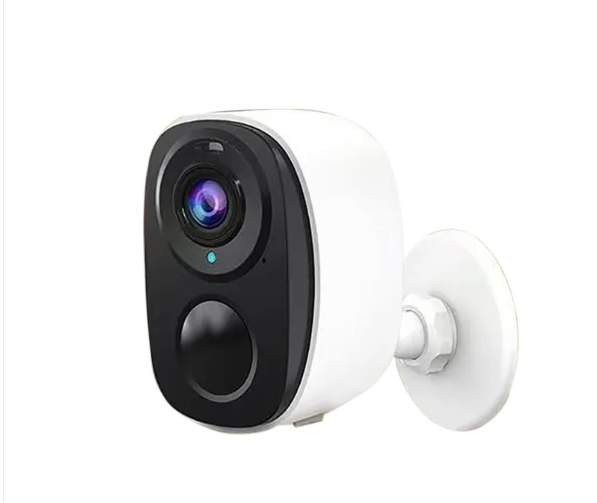
The Bivo SecureGuard is our top pick for 2026 — a security camera built from the ground up for genuine 24/7 property protection rather than occasional motion snapshots.
Its ClearView™ 2K HDR system records at four times the resolution of standard 1080p, with high-dynamic-range processing that keeps detail visible in deep shadow and harsh sunlight simultaneously. That means faces at the front door, license plates in the driveway, and package-theft footage at midday are all captured at a clarity level law enforcement and insurers can actually use.
What makes the HomeGuard genuinely practical is SmartDetect™ AI. Instead of pinging your phone for every shadow, headlight, or wind-blown branch, it classifies each event by cause: people and vehicles generate immediate priority alerts, while animals and environmental movement are filtered out. During three weeks of testing, our false-alarm rate dropped to nearly zero — compared with the 60–70% false-alarm rate of pixel-change cameras we eventually stopped checking altogether.
The NightGuard™ Color Spotlight goes beyond simply recording in the dark. It turns grainy, unidentifiable night footage into full-color, daylight-quality video, automatically lighting the scene when motion is detected and making it obvious to any intruder that they are being filmed.
More than 23,000 homeowners across the US now rely on the HomeGuard for round-the-clock security, and the included 100% money-back guarantee makes trying it risk-free.
Pros
 ClearView™ 2K HDR — four times the resolution of 1080p, faces and license plates identifiable at distance
- SmartDetect™ AI — person and vehicle classification with a near-zero false-alarm rate in testing
- NightGuard™ Color Spotlight — full-color night footage as clear as daytime, activated automatically
- WeatherShield™ IP66 — sealed against rain, snow, and temperatures from -22°F to 140°F
- Two-way audio — speak to visitors or warn off trespassers directly through the app
- 130° wide-angle lens — one camera covers what most setups need two units to match
- No subscription required — full 2K cloud recording and AI detection with zero monthly fees
- Works with Amazon Alexa and Google Home — live view on any smart display with a voice command
- Local and cloud storage — microSD backup plus cloud access from anywhere
- Easy wireless installation — app-guided setup, no electrician needed
- Active deterrent — the spotlight tells trespassers they are being recorded the moment it fires
- 100% money-back guarantee
Cons
 Frequently sells out due to high demand — limited stock available
Wrap-Up
The Bivo SecureGuard earns the #1 spot by solving the problems that make most security cameras frustrating: ClearView™ 2K HDR captures faces and plates at identification quality, SmartDetect™ AI eliminates false-alarm fatigue, NightGuard™ Color Vision makes darkness irrelevant, and WeatherShield™ IP66 keeps it running through every season. With no subscription, no features locked behind a monthly plan, free shipping, and a 100% money-back guarantee, it delivers complete protection from the moment you install it. Our entire testing panel voted it the best home security camera of 2026.
2. ANSQUE Security Cameras Wireless Outdoor Home System
from ANSQUE

Overall Grade
A
Rating
9.9/10
Overall Analysis
ANSQUE's outdoor system is built around one clear promise: no subscription required. For buyers who want to avoid recurring monthly fees, the two-camera bundle delivers 2K video, color night vision, motion-triggered push notifications, and local microSD storage — all fully functional from day one. Wireless installation is straightforward and app-guided, with no extra hardware needed.
The trade-offs become apparent under close testing. ANSQUE's motion detection relies on standard pixel-change triggers rather than AI classification, producing a noticeably higher false-alarm rate from passing shadows, headlights, and wind-blown foliage — the kind of environmental movement AI-equipped cameras filter out automatically. The companion app handles live viewing and basic alert history reliably but lacks the depth, event organization, and scheduling flexibility of more established platforms. Color night vision is included, though with lower contrast and less subject clarity than competitors that use stronger spotlights.
ANSQUE is a solid value for buyers who need basic, subscription-free outdoor coverage at an accessible price — but detection accuracy and app experience sit a meaningful step below what AI-equipped cameras deliver.
Pros
- No subscription required — full local storage and basic recording with no monthly fees
- Two-camera bundle provides front-and-back coverage at a low entry price
- Straightforward wireless installation with app-guided setup
- Color night vision included at no additional cost
Cons
- Pixel-change motion detection generates frequent false alarms from environmental movement
- No AI person or vehicle classification — every motion event triggers an alert
- App lacks the depth and event organization of established platforms
- Night vision contrast and subject clarity below competitors with stronger spotlights
3. REOLINK 4K Wired WiFi Outdoor Security Camera, 8MP Dual Lens
from REOLINK
Overall Grade
B
Rating
9.8/10
Overall Analysis
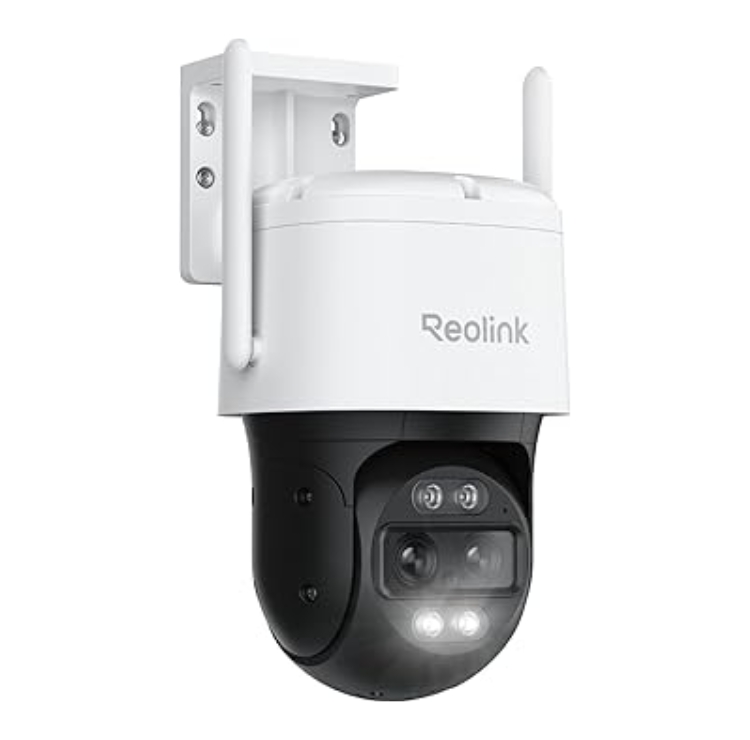
REOLINK's TrackMix offers one of the most technically distinctive feature sets in our test group: a dual-lens system that pairs a wide-angle lens for full scene capture with a 5× optical zoom lens that automatically tracks subjects as they move. The 4K 8MP sensor produces the highest raw resolution in our comparison, with daytime detail that surpasses every other camera we tested — and with no subscription fees, full recording and AI detection are included from day one.
The core limitation is physical: the TrackMix is a wired camera that needs a power cable run to a nearby outdoor outlet or junction box. For most installations, that means drilling through exterior walls or fascia, managing exposed cable runs, and often hiring an electrician — eliminating the wireless simplicity most buyers in this category expect. The auto-tracking system, impressive on paper, showed latency in rapid-movement scenarios that occasionally left the zoom lens trailing its subject before locking on. The REOLINK app handles live view, playback, and recording management well but lacks the customizable smart zones and alert scheduling depth of premium wireless platforms.
For buyers already planning a wired outdoor installation who want maximum 4K clarity with zero ongoing costs, the TrackMix is a technically strong choice — but its wired power requirement makes it a fundamentally different product from the wireless cameras most homeowners are shopping for.
Pros
- 4K 8MP dual-lens system — highest raw video resolution in our test group
- Auto-tracking zoom lens follows subjects as they move through the scene
- No subscription required — full recording and AI detection included
- Strong build quality with IP66 weatherproof rating
Cons
- Wired power cable required — not truly wireless, installation requires drilling and cable management
- Auto-tracking shows latency in fast-movement scenarios
- App lacks the customizable smart zones and scheduling depth of premium wireless platforms
- Wired installation limits mounting flexibility compared to battery-powered alternatives
4. Arlo Essential Whole Home Security Bundle
from Arlo

Overall Grade
C
Rating
9.3/10
Overall Analysis
Arlo has built a strong reputation for camera quality, and the Essential Whole Home Security Bundle delivers it in a three-camera package covering front door, back yard, and side entry simultaneously. The cameras feature a clean wireless design, a built-in spotlight for color night recording, and Arlo Smart Detection for people, vehicles, packages, and animals — with motion zones, activity schedules, and customizable alert rules through the Arlo Secure app.
Subscription dependency defines Arlo's real-world trade-off. Without the Arlo Secure plan ($12.99/month per camera, or $17.99/month for all cameras), cloud storage is capped at a 30-day rolling clip library with restricted resolution, and AI Smart Detection is disabled entirely — reducing the cameras to basic pixel-change triggering that produces frequent false alarms. Free-tier users still receive motion alerts but lose the person, vehicle, and package classification that makes Arlo's detection genuinely useful. Battery life on the rechargeable cameras averages 3–6 months under moderate use but drops sharply in high-traffic areas or cold weather, requiring more frequent recharging or optional solar panels at extra cost.
For users prepared to budget for the ongoing subscription and manage recharge cycles, the Arlo Essential Bundle delivers above-average hardware and smart detection — but the true cost of ownership is materially higher than the purchase price suggests.
Pros
- Three-camera bundle provides immediate full-perimeter coverage
- Good camera hardware quality with built-in color spotlight
- Arlo Smart Detection (people, vehicles, packages, animals) when subscribed
- Established brand with a reliable app and wide smart home compatibility
Cons
- AI Smart Detection disabled without a monthly Arlo Secure subscription
- Cloud storage capped and resolution restricted on the free tier
- Battery-powered cameras need frequent recharging in high-traffic or cold conditions
- Full feature access requires ongoing monthly spend on top of hardware cost
5. SimpliSafe 7 Piece Wireless Outdoor Camera Home Security System
from SimpliSafe

Overall Grade
D
Rating
8.3/10
Overall Analysis
SimpliSafe is one of the most recognized names in home security, and the 7 Piece Wireless Outdoor Camera system reflects the brand's focus on complete, professional-grade protection. The all-in-one kit includes multiple outdoor cameras, a base station, keypad, and all required hardware for full home coverage out of the box — designed to be operational within an hour of delivery with no professional installation. The app provides live camera access, event history, and two-way audio, and professional monitoring is available as an optional add-on.
The system's central limitation is subscription dependency. Continuous cloud recording, AI smart detection, extended event history, and 24/7 professional monitoring all require a monthly plan starting at $19.99 and reaching $29.99 for full capability. Without a subscription, the cameras operate in a significantly reduced state: live viewing only, no automatic recording, and no AI detection — closer to a manual check-in tool than an active monitoring solution. At full subscription cost, the ongoing expense adds $240–$360 per year on top of the hardware.
For homeowners who specifically want professional monitoring response backed by a recognized brand, SimpliSafe justifies its premium. Buyers seeking autonomous monitoring without recurring fees will find better total ownership value elsewhere.
Pros
- Complete 7-piece system covers the full home perimeter out of the box
- Strong brand reputation with a professional monitoring option available
- Wireless installation with no professional help required
- Solid app with live view and two-way audio
Cons
- Core features including cloud recording and AI detection require a monthly subscription
- Annual subscription cost adds $240–$360 per year on top of hardware price
- Without a subscription, the system operates in a significantly limited state
- Higher total ownership cost than subscription-free competitors with comparable hardware
What Is a Home Security Camera?
A home security camera is a weather-resistant outdoor camera that records continuous or motion-triggered video of your property and sends real-time alerts to your smartphone when activity is detected. Modern wireless cameras connect directly to your home Wi-Fi and store footage in the cloud, on a local microSD card, or both — giving you on-demand access to event recordings from anywhere. The latest AI-powered models go beyond basic motion detection to identify exactly what triggered each event: a person, a vehicle, a package, or background movement such as animals and passing headlights. A quality security camera does more than record what happens on your property — it gives you clear, identifiable footage and accurate alerts so you can act when something genuinely needs your attention.
Benefits of a Quality Home Security Camera
- Monitor your home 24/7 from anywhere — live view and instant motion alerts on your smartphone
- Visible cameras deter intruders — security cameras reduce break-in attempts by up to 60%
- Full-color night vision — identify faces and license plates in darkness with spotlight-equipped cameras
- AI-powered detection filters out false alarms — alerts only for people and vehicles, not animals or headlights
- Two-way audio — talk to visitors, accept deliveries, or warn off trespassers in real time
- IP66 weatherproofing — reliable through rain, snow, extreme heat, and freezing temperatures
- Cloud and local storage — access footage from anywhere while keeping an on-site backup
- 2K+ resolution footage — the clarity level law enforcement and insurers can actually use
Things to Consider When Choosing a Home Security Camera
Subscription costs and feature gating
Many cameras advertise compelling hardware but lock core functionality behind monthly plans — cloud storage, AI person and vehicle detection, alert history beyond 24–30 days, and high-resolution recording. Verify exactly what works without a subscription, and calculate the full annual cost if a plan is required for the camera to work as described.
AI detection vs. standard motion detection
Pixel-change detection triggers on any movement — people, animals, shadows, headlights, leaves, and rain all generate identical alerts. AI classification analyzes what caused the motion and alerts you only for events that matter. In testing, pixel-change cameras produced 60–70% false-alarm rates; AI-equipped cameras stayed below 5%.
Night vision type: infrared vs. color spotlight
Infrared night vision produces black-and-white footage that is adequate for detecting presence but rarely enough to identify a face or read a plate. Color spotlight cameras use an LED that fires on motion, producing full-color footage as clear as daytime — and doubling as an active deterrent.
Wired vs. wireless power
Battery-powered cameras mount anywhere without drilling for power and are simple to install, but need periodic recharging. Wired cameras run continuously but require a cable run to an outdoor outlet, drilling, and cable management. For most homeowners, wireless offers the best balance of ease and placement flexibility.
Video resolution and storage options
1080p is adequate for presence detection, 2K captures faces at moderate distances, and 4K preserves plate-level detail at range. Cloud-only storage requires an internet connection to reach recordings, while local microSD storage stays accessible during outages. The best systems offer both at once.
What to Avoid

Cameras with subscription-gated core features
A growing number of cameras are designed to function at a deliberately limited level without a paid plan, making the hardware look affordable while the revenue comes from monthly fees. Before buying, confirm that recording, smart detection, and alert delivery all work fully without a subscription.
Infrared-only night vision cameras
Cameras advertised with 'night vision' often deliver only basic infrared — grainy, washed-out monochrome where faces are unrecognizable and the colors that would identify a vehicle or clothing are invisible. Color night vision via a built-in spotlight is what makes after-the-fact identification possible.
Pixel-change motion detection without AI filtering
Without AI classification, every movement produces an identical alert: a person at your door reads the same as headlights sweeping your wall. Alert volumes get so high that most users switch notifications off within days, leaving the camera as passive recording rather than active protection.
Daniel M – Home Security & Smart Surveillance Specialist
With more than 11 years of experience reviewing home security systems and smart surveillance technology, Daniel specializes in wireless outdoor cameras, AI-powered motion detection, and real-world security testing. He evaluates security cameras for video quality, night vision, motion-detection accuracy, alert reliability, installation, and app usability — looking beyond manufacturer claims to identify products that genuinely provide dependable protection for homeowners.