We Spent 4 Weeks Testing 18 Label Printers to Find the Best Models for 2026
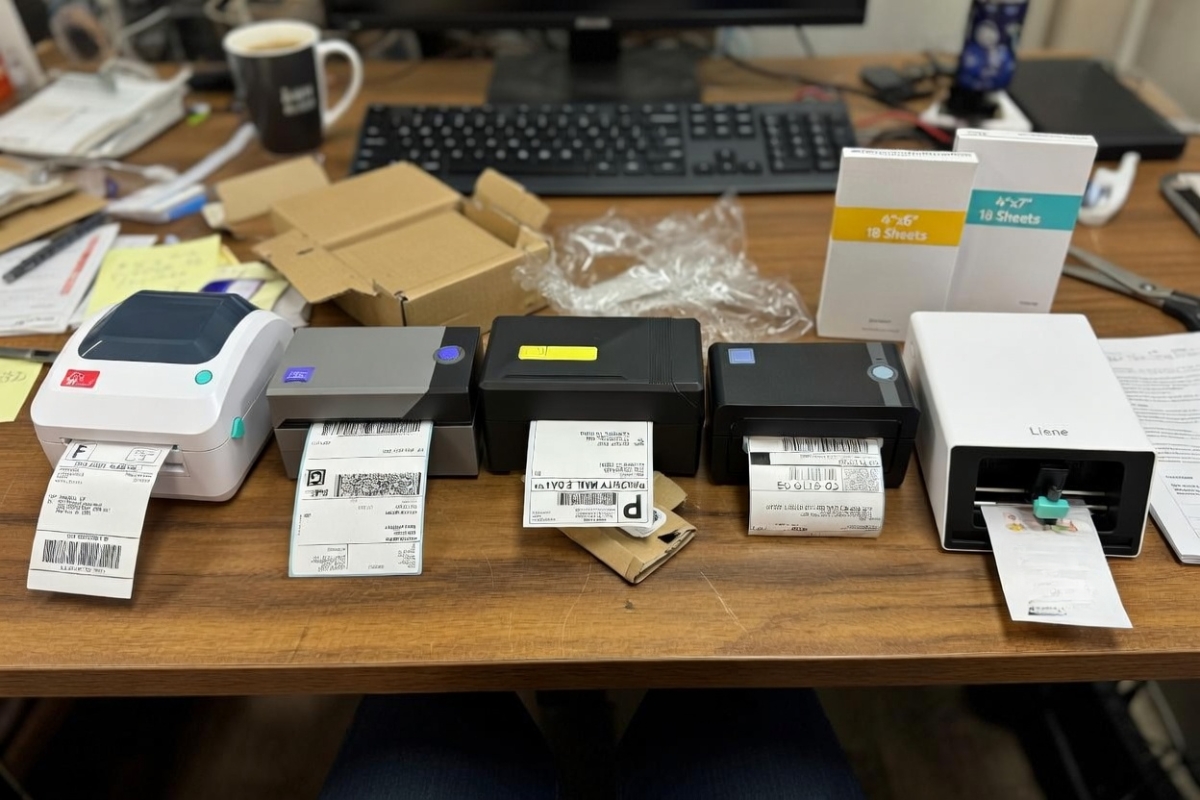
A shipping label is a small part of an order, but a printer problem can hold up the entire dispatch process. Smudged addresses, unreadable barcodes, and interrupted print runs create extra work just when a busy business needs everything to run smoothly.
For businesses sending dozens or hundreds of parcels each day, a dependable label printer matters as much as speed. The right model makes it easier to prepare clear labels, keep orders moving, and manage a growing workload.
We spent four weeks comparing 18 label printers across different price points and uses. Our focus was on the features that make a practical difference: printing performance, connection options, supported label sizes, and reliability.
Not every printer suits the same job. A model built for 4 × 6-inch shipping labels serves a different purpose from one designed for colorful stickers and product branding. Compatibility also deserves a close look, especially if you print from a phone, use several operating systems, or rely on a particular shipping platform.
Below are our five top-ranked models, with their strengths, limitations, and scores laid out side by side. We used four core criteria to assess how well each printer fits everyday business needs.
Print Speed & Efficiency
Printing speed and its effect on day-to-day efficiency, particularly during busy shipping periods.
Connectivity & Compatibility
Connection options and compatibility with operating systems, marketplaces, and shipping services.
Label Size Versatility
The range of supported label dimensions and suitability for different packaging and labeling tasks.
Durability & Reliability
Build quality, consistency under demanding workloads, and overall long-term value.

Andrew Mitchell - Business Automation & Logistics Specialist
Andrew Mitchell is a Business Automation & Logistics Specialist with over eight years of experience evaluating automation systems and logistics technology solutions. He specializes in assessing workflow efficiency, system integration, operational reliability, and ease of implementation, helping businesses identify practical technologies that streamline processes and improve day-to-day operations.
1. Bivo ThermoTag Thermal Label Printer
from Bivo
Overall Grade
A+
Rating
9.8/10
Our Assessment
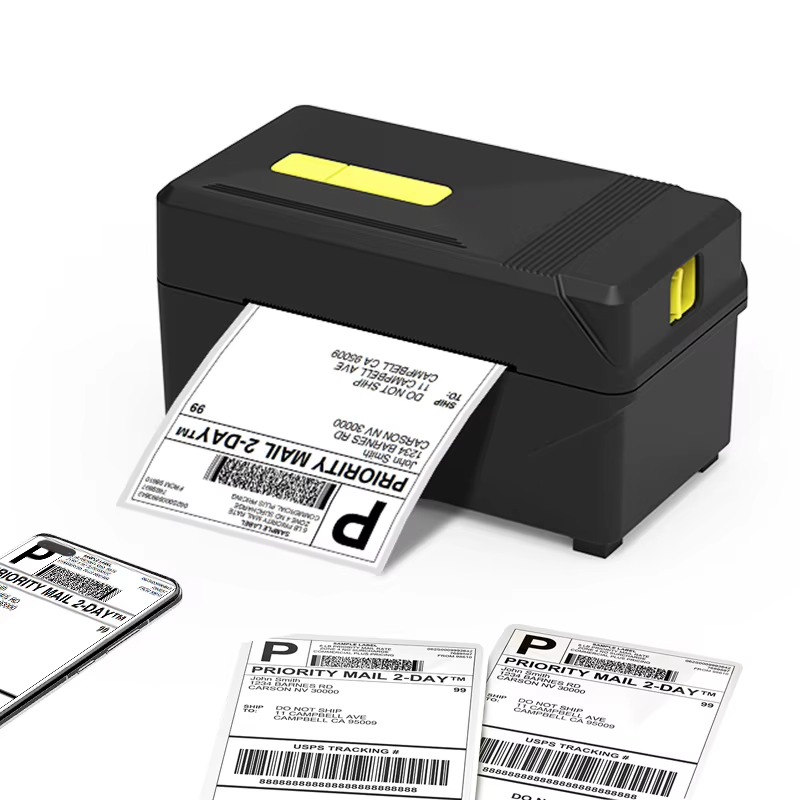
The Bivo ThermoTag Thermal Label Printer takes our top spot for its combination of speed, wireless connectivity, and flexible label support. Its compact design suits small and medium-sized businesses that need capable everyday printing without a bulky industrial machine.
It prints at up to 72 labels per minute with a resolution of 203 DPI, helping busy teams produce clear shipping labels quickly. Bluetooth connectivity includes anti-interference features for wireless operation, while USB provides an alternative connection when needed.
Label widths from 1.57 to 4.3 inches cover a useful range of tasks, including standard 4 × 6-inch shipping labels. The FlashLabel app supports a plug-and-play setup described as taking under two minutes without driver installation.
Low power consumption is another advantage. Bivo reports a 30% reduction in energy costs compared with conventional models, which adds to its appeal for businesses watching ongoing expenses.
The printer supports Windows, macOS, iOS, Android, and Chromebook systems, although Bluetooth printing has limitations on Mac and Chromebook. It is compatible with Amazon, eBay, Shopify, Etsy, UPS, FedEx, and USPS shipping workflows.
For businesses that want quick label production, a small footprint, and a choice of wired or wireless printing, Bivo ThermoTag offers a well-rounded package. Its broad compatibility and straightforward setup make it our strongest overall pick.
Pros
 Fast printing at up to 72 labels per minute
- Clear thermal printing at 203 DPI
- Broad compatibility across major operating systems
- Supports label widths from 1.57 to 4.3 inches
- Bluetooth connectivity with anti-interference features
- Low power use, with a reported 30% reduction in energy costs
- Plug-and-play setup without driver installation
- Compatible with major shipping platforms and marketplaces
- Compact design that takes up little desk space
- Customer support available through several contact channels
Cons
 Frequently out of stock because of strong demand from small businesses
Our Verdict
Bivo ThermoTag earns our top recommendation by balancing printing speed, label versatility, and ease of use. Its compact design and broad platform support make it a practical choice for e-commerce businesses looking to simplify everyday shipping.
2. Rollo USB Thermal Label Printer
from Rollo
Overall Grade
B+
Rating
8.7/10
Our Assessment
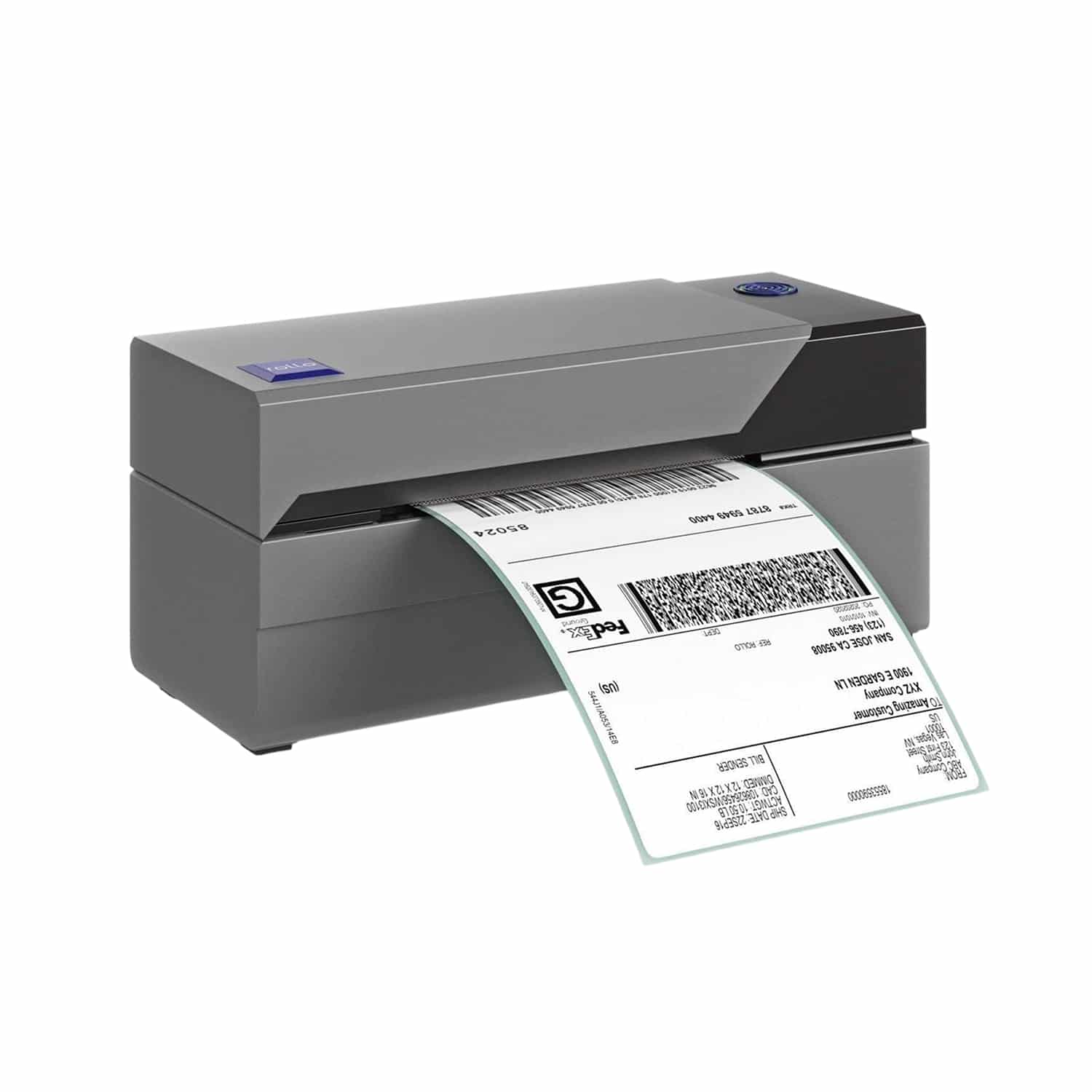
The Rollo USB Thermal Label Printer is a commercial-grade option built for regular business shipping. Its durable construction and consistent performance make it a strong choice for e-commerce teams handling a substantial daily workload.
A printing speed of 150 mm per second allows it to produce approximately one 4 × 6-inch label per second. Direct thermal technology needs no ink or toner, and its 203 DPI resolution produces clear text and scannable barcodes.
The free Rollo Ship Manager app provides access to discounted shipping rates without an additional platform subscription. Label widths from 1.57 to 4.1 inches also allow the printer to handle barcodes, product labels, and custom stickers alongside shipping labels.
Rollo supports FedEx, UPS, and USPS, as well as marketplaces including Amazon, Shopify, and Etsy. Setup involves downloading and installing drivers, with a straightforward process that is accessible to less experienced users.
The main trade-off is connectivity: this model uses USB and has no wireless option. For a business that prints from a fixed workstation, however, its speed, reliability, and shipping tools offer compelling value.
Pros
- Commercial-grade construction for high-volume use
- Fast printing at 150 mm per second
- Broad compatibility with major shipping platforms
- Free shipping app with access to discounted rates
- Direct thermal printing requires no ink or toner
- Supports label widths from 1.57 to 4.1 inches
- Straightforward setup and driver installation
- 203 DPI resolution for clear text and scannable barcodes
Cons
- USB-only connection, with no wireless printing
- Higher upfront cost than basic models
3. Liene PixCut S1 Thermal Label Printer
from Liene
Overall Grade
B
Rating
8.1/10
Our Assessment
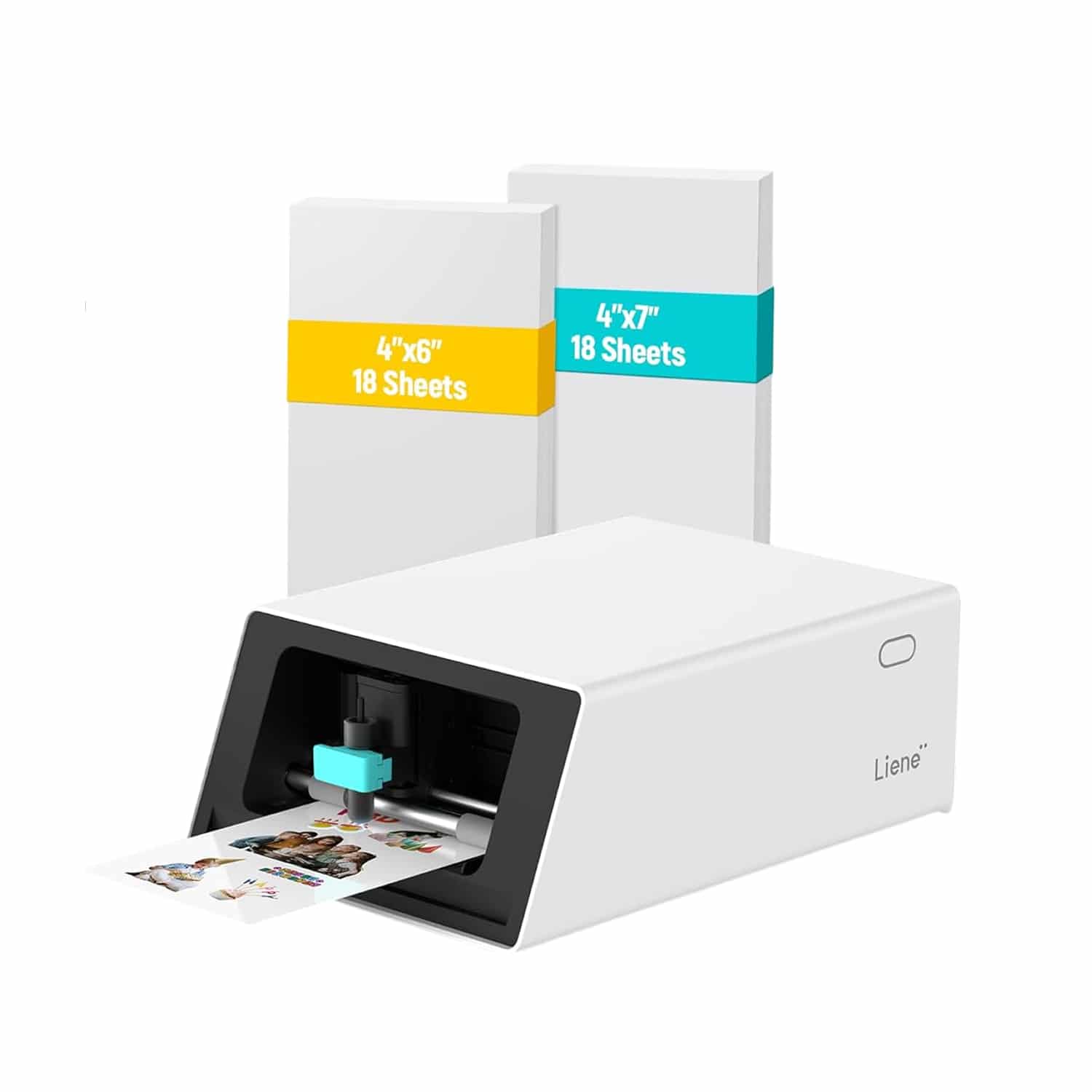
The Liene PixCut S1 combines color printing and precision cutting in one device. Unlike the shipping-focused models in this review, it is designed primarily for custom stickers, creative labels, and small-business branding.
Its thermal dye-sublimation technology prints at 300 DPI with 16.7 million colors. A four-layer process automatically laminates the finished stickers, adding protection against water, fading, and scratches.
AI image extraction identifies subjects in photographs and turns them into sticker designs. The integrated cutting system follows the edges of those designs, reducing the need to cut each sticker by hand.
Bluetooth lets users print from a smartphone through the accompanying app. Projects can be completed in approximately two minutes, making the device convenient for craft businesses and personalized label production.
The PixCut S1 is not intended for high-volume shipping labels, and its color-printing supplies cost more than basic thermal labels. It is a better fit for businesses that value colorful presentation and custom shapes over bulk dispatch speed.
Pros
- Prints and cuts stickers in a single device
- 300 DPI color printing with 16.7 million colors
- AI image extraction turns photo subjects into stickers
- Laminated stickers resist water and scratches
- Bluetooth printing from mobile devices
- Precision cutting with accurate edge detection
- Easy-peel backing that leaves no adhesive residue
Cons
- Not designed for high-volume shipping labels
- Higher supply costs for color printing
- Limited compatibility with major shipping platforms
4. Arkscan 2054A Thermal Label Printer
from Arkscan
Overall Grade
C+
Rating
7.5/10
Our Assessment
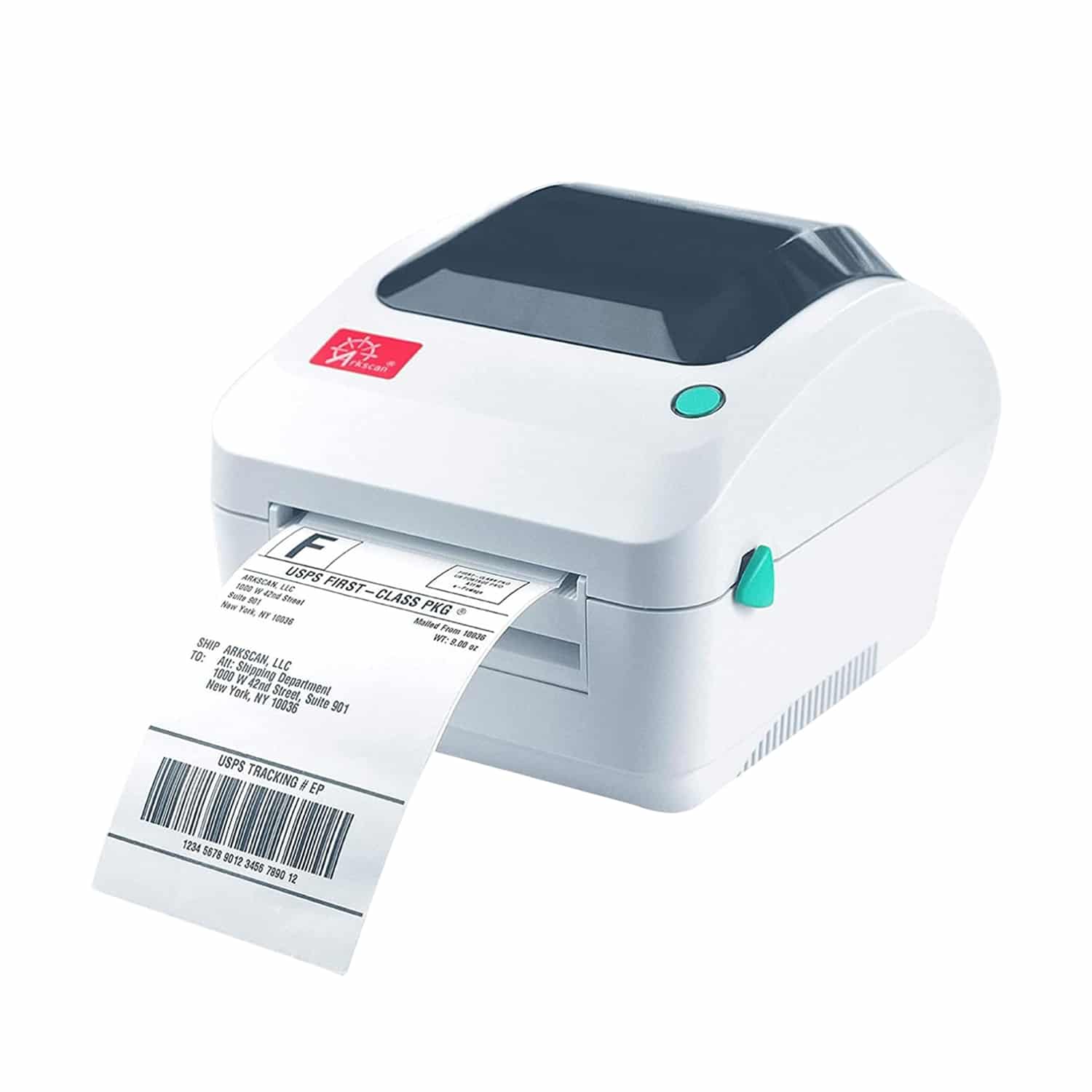
The Arkscan 2054A Thermal Label Printer pairs flexible label handling with accessible technical support. It suits businesses that need compatibility across several platforms and want help readily available when setup or printing problems arise.
It works with Amazon Seller Central, eBay, Etsy, and Shopify, along with USPS, UPS, and FedEx. Labels can be fed from an internal roll or from fanfold stock at the rear, giving users a choice of storage and loading arrangements.
Arkscan provides US-based support by phone, live chat, and remote access, with extended hours covering both coasts. That support is a useful advantage for businesses where printer downtime can interrupt daily dispatch.
The included BarTender UltraLite software offers tools for designing product labels, warehouse labels, and barcodes, but is available only on Windows. The printer supports label widths from 0.75 to 4.25 inches and lengths of up to 90 inches.
At 5 inches per second, it is fast enough for many small-business tasks, though slower than premium alternatives. Its USB-only connection and standard 203 DPI resolution are further trade-offs; the main appeal is flexible label support backed by helpful service.
Pros
- Broad compatibility with shipping platforms
- US-based technical support through several channels
- Accepts both roll and fanfold labels
- Includes free BarTender UltraLite label-design software
- Supports label widths from 0.75 to 4.25 inches
- Works with multiple operating systems, including Chrome OS and Android
Cons
- Slower printing than premium models
- BarTender software is available only for Windows
- Standard 203 DPI resolution without enhanced features
- USB-only connection, with no wireless option
5. JADENS Bluetooth Thermal Shipping Label Printer
from JADENS
Overall Grade
C
Rating
7.1/10
Our Assessment
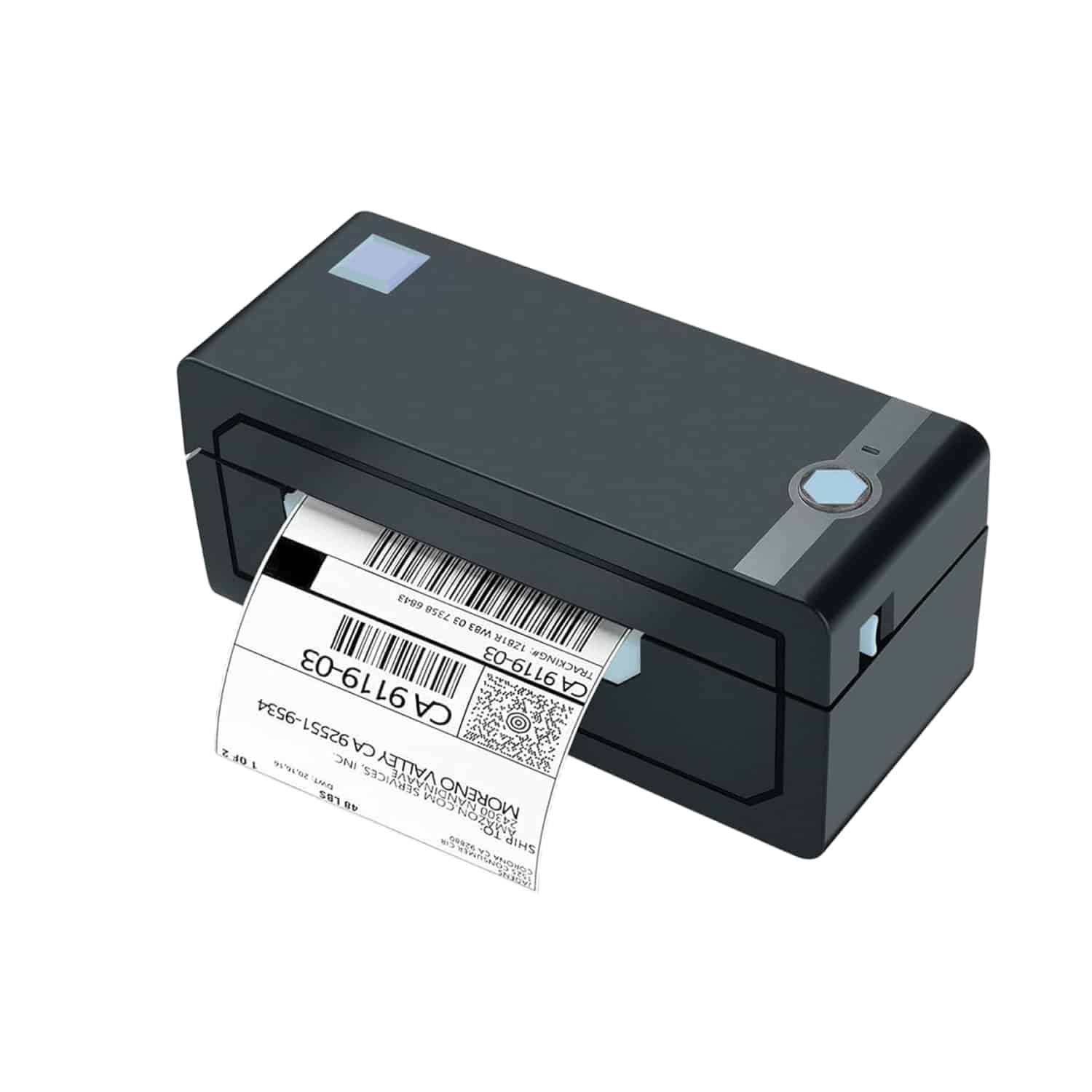
The JADENS Bluetooth Thermal Shipping Label Printer is an entry-level option for businesses that want wireless printing on a budget. Its main advantage is the ability to create labels from a phone or tablet rather than relying solely on a computer.
A Japanese thermal print head provides 203 DPI resolution for standard shipping labels and basic barcodes. Direct thermal printing avoids the need for ink or toner, keeping routine supplies simple.
Bluetooth printing works with Windows 8 and later. On iOS and Android, wireless printing requires the JADENS Printer app; Mac users are limited to a USB connection.
The printer supports Amazon, eBay, Shopify, and a range of shipping software. It accepts both fanfold and roll labels with widths from 1.57 to 4.1 inches, covering common shipping-label sizes.
A one-year warranty and support by email, phone, and remote control provide some reassurance. Its slower performance and limited support resources make it better suited to very small businesses and occasional printing than demanding commercial workloads.
Pros
- Bluetooth connectivity for wireless mobile printing
- Supports both iOS and Android devices
- Japanese thermal print head for consistent performance
- Direct thermal printing requires no ink or toner
- One-year warranty with several support options
Cons
- Mac users can print only through USB
- Standard 203 DPI resolution without advanced features
- Wireless mobile printing requires the app
- Slower printing than commercial-grade models
- Limited technical support resources
What Are Thermal Label Printers?
Thermal label printers use heat to produce labels for shipping, product identification, and inventory management. They offer an alternative to conventional inkjet and laser printing, with supplies and maintenance needs that depend on the printing method.
Direct thermal printers apply heat to specially coated labels, creating text and images without ink or toner. This simple process is widely used for shipping labels and other everyday business tasks.
Thermal transfer printers use a heated ribbon to transfer ink onto the label material. The distinction matters when choosing labels for different applications and durability requirements.
Depending on the model, connection options may include USB, Ethernet, Wi-Fi, or Bluetooth. Supported label sizes also vary, so it is important to match the printer to your software, devices, and typical labeling jobs.
A well-matched label printer helps businesses prepare labels more efficiently, reduce manual work, and keep shipping and stock-management processes organized.
Benefits of Thermal Label Printers
- No Ink Cartridges or Toner: Direct thermal printing eliminates cartridge replacement, simplifying routine supplies and maintenance.
- Fast Label Production: Thermal printers produce labels quickly, with some models reaching speeds of up to 12 inches per second.
- Clear Text and Barcodes: Sharp printing helps labels look professional and makes barcodes easier to scan.
- Durable Label Options: Suitable label materials can withstand moisture, abrasion, and handling; durability depends on the material and printing method.
- Compact Footprint: Many models fit comfortably on a desk or counter without taking up much workspace.
- Software Integration: Compatible printers connect with shipping platforms, inventory systems, and e-commerce tools to simplify daily workflows.
- Lower Running Costs: Thermal printing can reduce per-label costs, particularly for businesses producing labels in large quantities.
- Quiet Printing: Thermal printers generally operate quietly, making them well suited to shared offices and small workspaces.
What to Consider When Choosing a Label Printer
- Print Resolution: Choose a DPI rating that provides enough detail for your text, barcodes, and intended label size.
- Connection Options: Check whether USB, Ethernet, Wi-Fi, or Bluetooth best suits your devices and workflow.
- Label Width: Confirm that the printer supports your largest shipping label, product tag, or inventory label.
- Printing Speed: Compare speed ratings with your daily workload to avoid delays during busy periods.
- Software Compatibility: Verify support for your operating system, shipping software, and e-commerce platforms before buying.
- Workload Capacity: Check the recommended monthly print volume against the number of labels your business expects to produce.
- Total Ownership Cost: Include label supplies, ribbons for thermal transfer models, and maintenance when comparing long-term costs.
What to Avoid When Buying a Label Printer
 Ignoring Storage Conditions: Heat, sunlight, and chemicals can fade direct thermal labels, making important details difficult to read.
- Underestimating Print Volume: A printer with too little capacity may wear out sooner or struggle to keep up with demand.
- Overlooking Compatibility: Unsupported software or devices can interrupt workflows and lead to extra setup costs.
- Choosing on Price Alone: A low purchase price is less useful if print quality, reliability, or long-term performance falls short.
- Neglecting Technical Support: Check how to contact the manufacturer and what assistance is available before a problem disrupts your work.
Andrew Mitchell - Business Automation & Logistics Specialist
Andrew Mitchell is a Business Automation & Logistics Specialist with over eight years of experience evaluating automation systems and logistics technology solutions. He specializes in assessing workflow efficiency, system integration, operational reliability, and ease of implementation, helping businesses identify practical technologies that streamline processes and improve day-to-day operations.