We Spent 3 Weeks Testing 13 Mini PCs to Find the Best for 2026
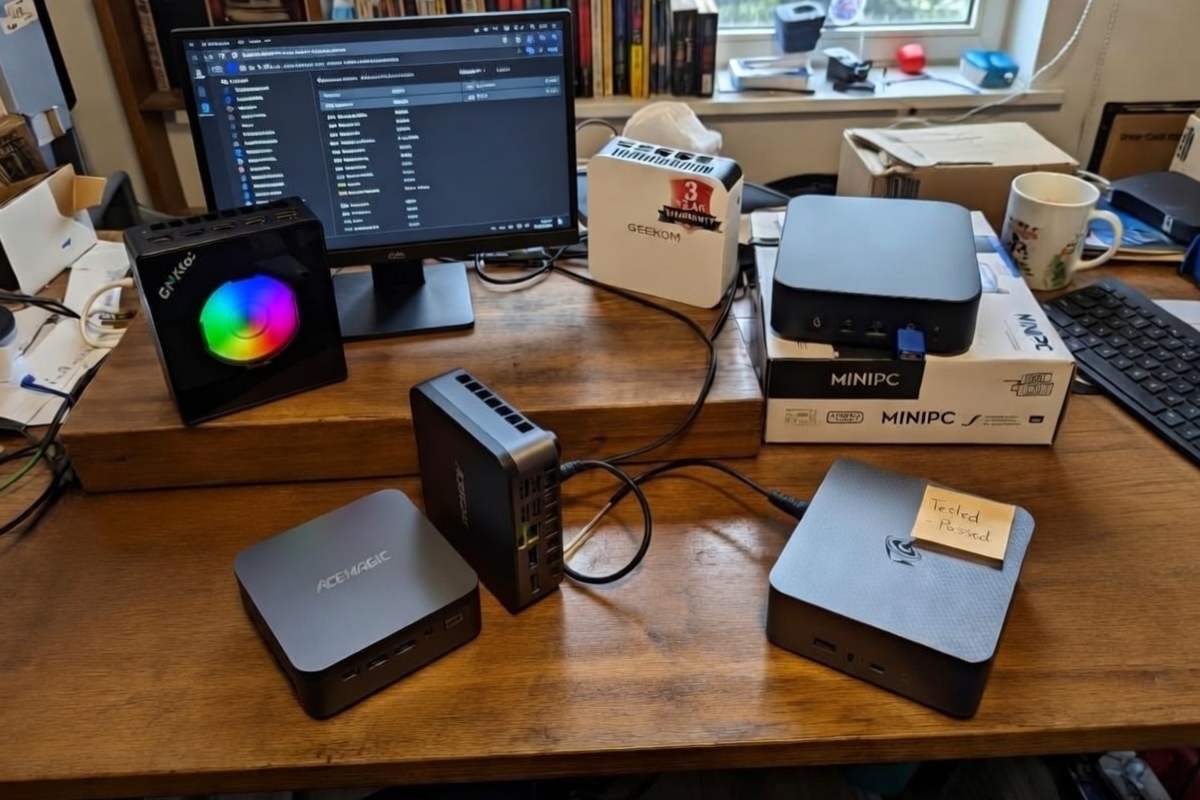
After years of watching bulky desktops dominate desks, laptops throttle under sustained workloads, and mini PCs promise desktop power while delivering heat-limited disappointment, we decided to find the best mini PC for 2026. Manufacturer specs and online listings rarely tell the full story, so we put the most popular models through real-world testing to see which ones actually deliver reliable computing in a genuinely compact footprint.
We tested 13 mini PCs from Bivo, GMKtec, ACEMAGIC, Beelink, and GEEKOM. The top five were evaluated across four key areas:
Processing Speed & Multitasking
We ran realistic mixed workloads — browser tabs, video streaming, spreadsheets, and file transfers running simultaneously — to see which units stayed responsive without throttling. We also timed app launches, cold boots, and large file operations.
Memory & Storage Performance
We benchmarked RAM capacity and speed against demanding workloads and measured SSD read/write performance with sequential and random file tests. We also checked whether memory was upgradeable and how much future headroom each unit offered.
Connectivity & Port Selection
We audited every port — USB 3.x, HDMI, DisplayPort, Ethernet, and audio — and connected dual monitors, keyboards, external drives, and peripherals at once to see which units needed an extra hub to function on a real desk.
Thermal Management & Noise
We ran extended CPU stress tests and measured peak temperatures and fan noise from a normal working distance. Units that held performance without throttling — and stayed quiet enough for a home office — scored highest.
After three weeks of hands-on testing and direct comparison, here are the top five best mini PCs for 2026.

Ethan O – Tech & Home Office Specialist
With over 10 years of experience reviewing consumer electronics and home computing hardware, Ethan specializes in compact PCs, home office setups, and productivity technology. He is passionate about helping everyday users find reliable, powerful computing solutions that fit any workspace and budget without compromising on performance.

1. Bivo Mini PC
from Bivo
Overall Grade
A+
Rating
9.9/10
Overall Analysis
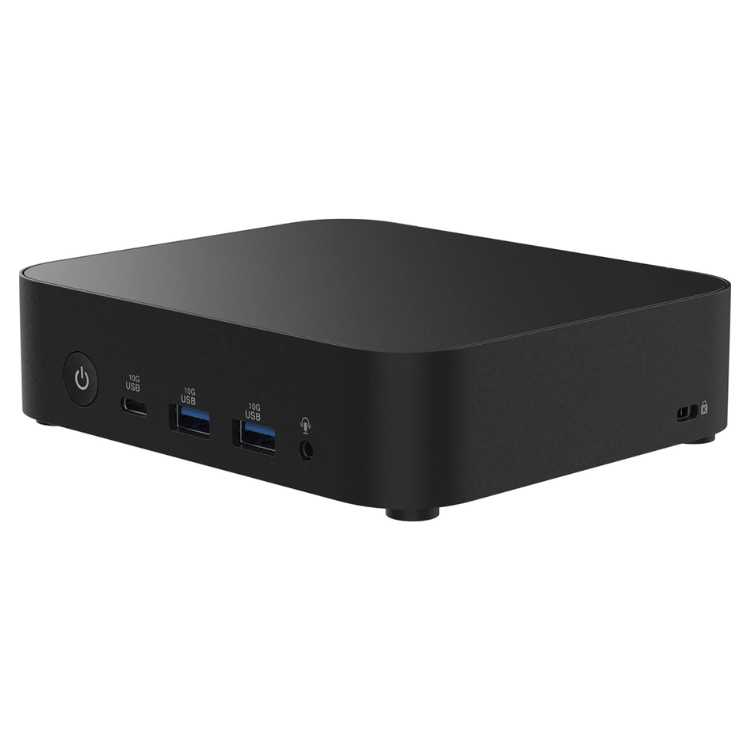
The Bivo Mini PC is our clear top pick for 2026 — the only compact desktop we tested that truly feels like a full-size computer shrunk into a palm-sized chassis.
What impressed us first was the responsiveness. Apps open instantly, dozens of browser tabs stay fluid, and 4K video plays smoothly without a single hiccup. Even during long multitasking sessions, performance stayed steady — no sudden slowdowns, no heat-induced throttling, and no frustrating waits.
Dual HDMI outputs are a genuine advantage. We connected two 4K monitors side by side — spreadsheets on one, video calls on the other — and the setup ran flawlessly with no lag or image degradation. For anyone who wants a real multi-screen workspace without a tower under the desk, this is a game-changer.
Storage and memory are equally strong. The NVMe SSD makes booting, file transfers, and app launches feel immediate, while the 16GB of DDR4 RAM handled our heaviest workloads with room to spare.
Thermals and noise are where many mini PCs fall apart, but not this one. During normal office and entertainment use the Bivo stayed whisper-quiet, and even under sustained stress it remained stable and composed without throttling.
With more than 14,000 home office users and entertainment enthusiasts already using it as their main desktop, plus a 100% money-back guarantee, there is little risk in giving it a try.
Pros
 Full desktop performance in a compact, palm-sized form factor
- Dual HDMI outputs drive two 4K monitors at once
- Fast NVMe SSD for instant booting and responsive file handling
- 16GB DDR4 RAM handles demanding multitasking with headroom
- Whisper-quiet cooling during office and entertainment use
- WiFi 6 and Bluetooth 5.0 for reliable wireless connections
- Gigabit Ethernet for stable wired networking
- USB 3.2 ports front and rear reduce the need for extra hubs
- Windows 11 Pro included for full software compatibility
- Ideal for compact workspaces and living room entertainment setups
- Frees up desk space without sacrificing computing power
- Backed by a 100% money-back guarantee
Cons
 Often out of stock because of high demand
Wrap-Up
The Bivo Mini PC earns our top spot by delivering what most mini PCs only promise: true desktop-level performance in a quiet, desk-friendly package. Dual 4K display support, fast NVMe storage, and well-controlled thermals make it the most complete mini PC we tested in 2026 — and with free shipping plus a money-back guarantee, trying it is essentially risk-free.
2. ACEMAGIC M5 Mini PC Core i9
from ACEMAGIC

Overall Grade
A
Rating
9.9/10
Overall Analysis
The ACEMAGIC M5 arrives with serious credentials: an Intel Core i9 processor wrapped in a premium aluminium chassis, a generous port selection, and a clean Windows 11 Pro setup. On paper, it is one of the most impressive units in our test group.
In practice, the experience depends on the workload. For short, lightly threaded tasks the M5 is exceptionally fast, posting the highest single-core scores we measured. The problems start under sustained all-core load. During long exports, extended video editing, and heavy multitasking, the M5 throttled noticeably to keep temperatures in check, and fan noise climbed to the loudest level in our group. The i9 badge looks compelling, but for everyday home office use the thermal design does not convert that raw power into a proportionally better experience than the Bivo Mini PC — and the price reflects the spec more than the real-world result.
Pros
- Intel Core i9 delivers excellent single-thread performance
- Premium aluminium chassis feels solid and well built
- Comprehensive port selection covers most setups
- Fast SSD and quick boot times
Cons
- Significant thermal throttling under sustained all-core workloads
- Fan noise becomes loud during heavy use
- Premium price is not matched by everyday performance gains
- Thermal limits prevent the i9 from stretching its legs in extended use
3. GMKtec K11 AMD Ryzen 9
from GMKtec

Overall Grade
B
Rating
9.6/10
Overall Analysis
The GMKtec K11 is built for users who want maximum CPU muscle in a small box. Its AMD Ryzen 9 processor delivered some of the fastest raw performance numbers in our group, and the integrated Radeon graphics handled light gaming and GPU-assisted tasks better than most mini PCs we tested.
That power comes with trade-offs. The K11 is larger and heavier than the rest of our top five, runs hotter under sustained load, and produces the loudest fan noise in the group. For a quiet home office or living room setup, that is a real drawback. It also costs substantially more than the Bivo Mini PC without delivering a matching advantage for typical office or streaming use. If you need peak Ryzen performance and do not mind the noise, the K11 is a strong option. For most buyers, it is more power than they need in a bigger, louder package.
Pros
- AMD Ryzen 9 delivers strong raw CPU performance
- Handles light gaming and GPU workloads better than typical mini PCs
- Good selection of connectivity options
- Windows 11 Pro included
Cons
- Noticeably larger and heavier than a standard mini PC
- Loudest fan noise in our test group under load
- Higher price without proportional everyday benefits
- Thermal throttling observed during extended workloads
4. Beelink EQI13 Mini PC
from Beelink

Overall Grade
C
Rating
9.5/10
Overall Analysis
Beelink has earned a reputation for dependable, no-nonsense mini PCs, and the EQI13 continues that tradition. Document editing, web browsing, video calls, and light file work all ran smoothly. The chassis is genuinely compact, the port layout is practical, and the unit stayed quiet during light use.
The limitations show up once you move beyond basic productivity. In our multitasking benchmark the EQI13 was the slowest of the top four, falling noticeably behind the Bivo Mini PC, and its SSD speeds were the most modest in the group. The fan also became audible during medium-intensity tasks that quieter competitors handled in silence. It is a solid choice for light home office work or a media PC, but less convincing if you need snappy performance across a full workday.
Pros
- Reliable brand with a history of stable performers
- Genuinely compact form factor
- Quiet during light use
- Practical port layout for basic home office setups
Cons
- Slowest overall performance in our top-four group
- More modest SSD speeds compared to top performers
- Fan becomes audible during medium-intensity multitasking
- Noticeably slower response under simultaneous workload testing
5. GEEKOM Mini PC AI A7 MAX
from GEEKOM

Overall Grade
D
Rating
9.4/10
Overall Analysis
The GEEKOM AI A7 MAX is the most expensive unit we tested, built around an AMD Ryzen 9 processor and marketed heavily around AI acceleration. Raw benchmarks were strong — solid multi-threaded performance and generous RAM configurations that handled our most demanding scenarios without breaking a sweat.
The value case is harder to make. The AI branding adds a clear premium over non-AI Ryzen 9 alternatives, yet the AI features produced no measurable benefit in any real task we ran. Browsing, documents, streaming, and light creative work all performed identically to less expensive competitors. Pre-installed software bloat also added startup delays and background CPU usage, partly cancelling out the hardware advantage. Good performance, but poor overall value: you are paying extra for marketing rather than a noticeably better computing experience.
Pros
- AMD Ryzen 9 delivers strong multi-threaded CPU performance
- Generous RAM configurations available
- Solid connectivity suite
- Premium build quality
Cons
- Most expensive unit in our test group by a significant margin
- AI features produced no measurable real-world performance benefit
- Pre-installed bloatware adds startup delays and background CPU drain
- Price premium reflects marketing, not better everyday performance
What is a Mini PC?
A mini PC is a compact desktop computer that delivers full Windows performance in a chassis small enough to sit in your palm or mount behind a monitor. Unlike a laptop, it connects to your own display, keyboard, and mouse for a true desktop experience without the bulk of a tower. Unlike a traditional desktop, it takes up a fraction of the space, draws less power, and runs quietly — making it ideal for home offices, living room entertainment setups, secondary workstations, and anywhere a full tower simply does not belong.
Benefits of a Quality Mini PC
- Full desktop performance in a fraction of the desk space
- Connect one or two 4K monitors for a proper multi-screen workspace
- Quiet operation — ideal for home offices and living room setups
- Lower power consumption than a full-size desktop
- Windows 11 Pro compatibility with all your existing software
- Fast NVMe SSD storage for instant app launches and file handling
- Easy to move between rooms, offices, or travel setups
- Replaces a bulky tower without sacrificing productivity
What to Look For When Choosing a Mini PC
Processor generation & architecture
The processor determines how fast your mini PC handles everyday tasks, multitasking, and sustained workloads. Newer Intel and AMD chips deliver far better performance-per-watt — essential in a compact chassis where thermal headroom is limited.
RAM capacity & upgradeability
16GB is the practical minimum for smooth multitasking in 2026. Some units solder their memory in place with no upgrade path, so confirm whether RAM can be added if you plan to expand later.
Storage speed (NVMe vs SATA)
NVMe SSDs are three to five times faster than SATA for everyday file operations, and you feel it in boot times, app launches, and large transfers. Check the storage type and whether a second M.2 slot is available.
Display output count & resolution
Check how many monitors the unit drives and at what resolution. Dual 4K output is the practical standard for home office work; some budget units support only one display or cap out at 1080p.
Thermal design & fan noise
Compact chassis heat up fast under load. Poor cooling causes the processor to throttle, so real-world performance drops well below the advertised spec during sustained use.
What to Avoid When Choosing a Mini PC

Soldered, non-upgradeable RAM
Some mini PCs solder memory directly to the board with no upgrade path. If your workload grows, you are stuck — check that RAM is user-replaceable before committing.
Weak thermal management
A high-spec processor in a poorly cooled chassis throttles under sustained load, delivering worse real-world performance than a lower-spec unit that stays cool. Look for throttling reports before buying.
Pre-installed bloatware
Some brands ship with aggressive pre-installed software that eats CPU and RAM in the background, slowing both first setup and ongoing performance. Check reviews for bloatware complaints.
Ethan O – Tech & Home Office Specialist
With over 10 years of experience reviewing consumer electronics and home computing hardware, Ethan specializes in compact PCs, home office setups, and productivity technology. He is passionate about helping everyday users find reliable, powerful computing solutions that fit any workspace and budget without compromising on performance.