We Spent 4 Weeks Testing 17 Tablets to Find the Best for Everyday Use in 2026
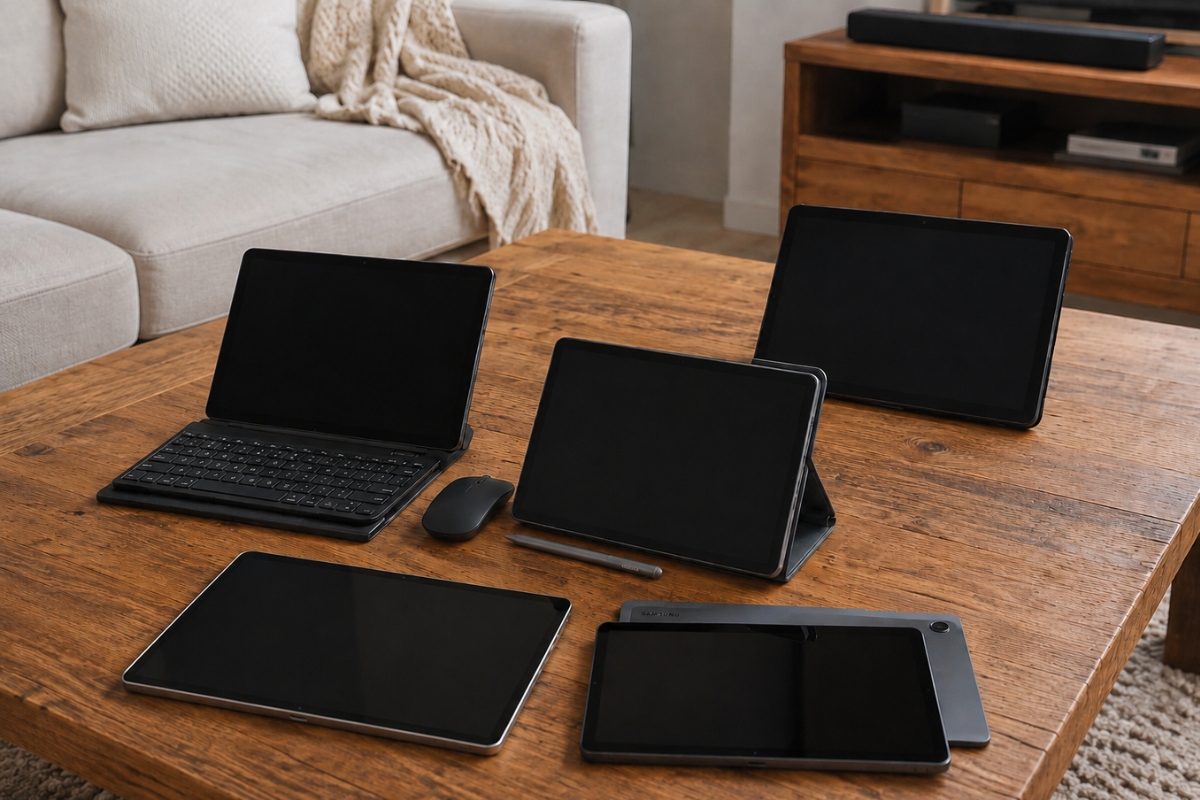
With hundreds of tablets on the market and prices ranging from around A$60 to well over A$1,000, choosing the wrong one means wasting money on a device that lags, drains quickly, or disappoints within a year. We spent four weeks testing 17 of the most popular Android tablets across entertainment, productivity, browsing, and real-world daily use to find the models actually worth buying in 2026.
Our shortlist included tablets from Bivo, OnePlus, Lenovo, Samsung, and Amazon Fire, each evaluated through hands-on, day-to-day testing against four core criteria:
Display Quality
We measured resolution, brightness, color accuracy, and comfort across different lighting — from bright outdoor use to late-night reading. A great display should remain sharp and easy on the eyes at any brightness, without washing out or causing strain.
Performance & Multitasking
We ran multiple apps simultaneously, streamed video, browsed the web, and handled productivity tasks — tracking app load times, scrolling smoothness, and how each device held up under sustained use without slowdown or overheating.
Battery Life
We ran standardized drain tests across video playback, web browsing, and mixed-use sessions to measure real-world battery life — not just manufacturer claims — plus charging speed from empty to full.
Value for Money
We assessed whether each tablet's performance, build quality, and features justified its price. A higher price doesn't automatically mean a better tablet — we weighed what each device actually delivers against what it costs.
After four weeks of hands-on testing, here are the top five best tablets of 2026.

Ryan D – Mobile Technology & Consumer Electronics Specialist
With over nine years of experience testing and reviewing tablets, smartphones, and mobile accessories, Ryan specializes in evaluating Android devices across a wide range of prices and everyday use cases. He has personally tested dozens of tablets for display quality, performance, battery life, software experience, and overall value — helping readers choose the right device for entertainment, work, learning, and daily life.

1. Bivo Tablet
from Bivo
Overall Grade
A+
Rating
9.8/10
Overall Analysis
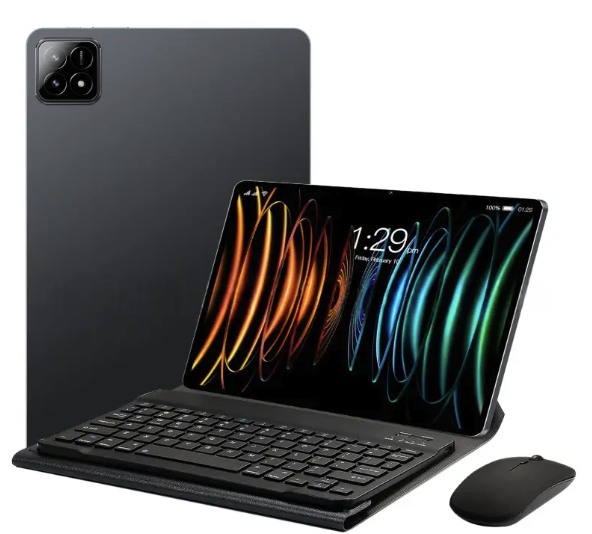
The Bivo Tablet stands out as the best all-around tablet of 2026 — the only model we tested that genuinely balances entertainment, productivity, and everyday browsing in a slim, portable design that fits real life rather than forcing compromises.
What makes it special is how effortlessly it handles the tasks people actually use tablets for. Streaming movies on a flight, clearing emails during a commute, video-calling family from the sofa, or passing it to a child for homework — the Bivo Tablet keeps up without stuttering, overheating, or dying before the day is done.
Our panel immediately noticed the display: crisp, bright, and easy on the eyes across long sessions and varied lighting. Where budget alternatives fade in sunlight and premium rivals strain the eyes indoors, the Bivo Tablet's screen adjusts smoothly. Combined with its 8,000mAh battery, it outlasted every competitor in both video playback and mixed-use tests.
The included keyboard is another highlight. Unlike rivals that charge extra for a typing accessory, Bivo bundles one that feels natural for long work sessions — a real differentiator at this price.
More than 15,000 US customers have already adopted the Bivo Tablet as their go-to device for work, entertainment, and everything in between. With free shipping and a 100% money-back guarantee, trying it carries no risk.
Pros
 8,000mAh battery outlasts every rival in real-world use
- Smooth, responsive performance with no lag during multitasking
- Crisp, bright display that remains comfortable in any lighting
- Keyboard included — no extra purchase needed for productivity
- Slim, lightweight design that's easy to hold and carry all day
- One device for entertainment, work, and browsing
- Fast app loading and fluid video streaming
- Handles video calls, browsing, and apps simultaneously without slowing down
- Durable build quality that withstands daily handling
- Free shipping included
- 100% money-back guarantee
Cons
 Frequently out of stock due to high demand
Wrap-Up
The Bivo Tablet earns the top spot by delivering what most tablets at this price cannot: fluid performance, excellent battery life, and a complete package that covers entertainment, work, and browsing without compromise. Free shipping and a 100% money-back guarantee make it risk-free to try — and our entire testing panel unanimously voted it the #1 tablet of 2026.
2. Lenovo Idea Tab 11" 2.5K College Tablet
from Lenovo

Overall Grade
A
Rating
8.3/10
Overall Analysis
The Lenovo Idea Tab offers the best screen-per-dollar ratio in this year's lineup. Its 11-inch 2.5K (2560x1600) IPS panel runs at a fluid 90Hz, backed by 8GB of RAM and a roomy 256GB of storage, expandable via microSD. It ships with Android 15, and Lenovo includes both a Tab Pen and a folio case — accessories most competitors sell separately. The TÜV Rheinland Low Blue Light certification makes late-night sessions easier on the eyes, quad Dolby Atmos speakers handle streaming duty with confidence, and Lenovo quotes up to 12 hours of YouTube playback per charge.
Where it falls short is endurance and out-of-the-box productivity. The 7,216mAh battery sits below the 8,000mAh leaders, the 20W charger is slower than the 45W fast charging found elsewhere, and no keyboard is included — so typing-heavy work means an extra purchase. It's an excellent student and streaming tablet, but the complete package remains a step behind our top pick.
Pros
- 11" 2.5K (2560x1600) IPS display with smooth 90Hz refresh
- 8GB RAM and 256GB storage, expandable via microSD
- Tab Pen and folio case included in the box
- TÜV Rheinland Low Blue Light certified display
- Up to 12 hours of YouTube playback per charge
Cons
- 7,216mAh battery lags behind the 8,000mAh class leaders
- No keyboard included — productivity typing requires a separate purchase
- 20W charging is slower than the 45W fast charging available elsewhere
3. Amazon Fire HD 8 Tablet
from Amazon Fire Tablets

Overall Grade
B
Rating
8.1/10
Overall Analysis
The Amazon Fire HD 8 is the most affordable tablet in our test, and its value proposition is clear: basic media consumption and easy access to the Amazon ecosystem at the lowest possible entry price. For households that mainly want a device to stream Prime Video, read Kindle books, and browse Amazon, it does exactly that.
Performance testing revealed the expected limitations at this price point. App loading was noticeably slower than every other device in our group, and running multiple apps at once caused visible lag. Fire OS also locks users into Amazon's platform — accessing Google Play apps requires sideloading workarounds, so the standard Android catalog isn't available natively. Build quality is acceptable but plastic-heavy, and display brightness and color accuracy fell below every other tablet we tested. As a dedicated Kindle or Prime Video viewer it makes sense; as a general-purpose tablet it falls well short.
Pros
- Lowest price point in the tablet category
- Works well for Prime Video and Kindle reading
- Adequate battery for light daily use
- Compact and lightweight for basic tasks
Cons
- Noticeably slower app loading than all competitors
- Fire OS limits access to the standard Google Play app catalog
- Display brightness and color accuracy below every other model tested
- Significant lag during multitasking
- Plastic build feels cheap compared to higher-tier alternatives
4. Samsung Galaxy Tab A11+ 11" 8GB 256GB Android Tablet
from Samsung

Overall Grade
C
Rating
7.8/10
Overall Analysis
The Samsung Galaxy Tab A11+ is the family workhorse of this year's field. With 8GB of RAM and 256GB of expandable storage, it has real headroom for multitasking, large app libraries, and big files. Samsung's upgraded chipset keeps everyday tasks, movies, and games responsive, the bright 11-inch screen runs at up to 90Hz for fluid scrolling and streaming, and quad speakers with Dolby Atmos deliver a cinematic audio experience. The slim, light design makes it easy to carry between rooms and on trips, and Samsung backs it with a 2-year warranty — the longest coverage in this comparison.
The gaps appear once you look past the headline specs. Samsung publishes no battery capacity or runtime figure, only a 'long-lasting battery' claim with fast charging. The screen resolution also isn't documented on the listing, and no keyboard, case, or pen is included. A dependable family choice with strong fundamentals, but too many missing numbers to challenge the top of this list.
Pros
- 8GB RAM and 256GB expandable storage for multitasking and large files
- Bright 11" screen with up to 90Hz refresh for fluid streaming
- Quad speakers with Dolby Atmos for cinematic sound
- 2-year warranty — the longest coverage in this comparison
- 4.6-star average across 1,777 Amazon ratings
Cons
- Battery capacity and runtime hours are not published — only a 'long-lasting' claim
- Screen resolution is not documented on the listing
- No keyboard, case, or pen documented in the box
5. Lenovo Idea Tab Pro with Google Gemini
from Lenovo

Overall Grade
D
Rating
7.7/10
Overall Analysis
The Lenovo Idea Tab Pro's standout feature is built-in Google Gemini AI, which separates it from every other tablet in this test. For users who want AI-assisted productivity — summarizing documents, drafting emails, or asking context-aware questions — the integration delivers genuine utility that feels more natural than opening a separate app.
Performance was solid across productivity and browsing tests, and display quality ranked among the better screens in the mid-range category. Battery life was adequate but not exceptional — it survived video and browsing sessions but needed a recharge by evening under heavier workloads. Build quality feels sturdy and professional, though it's one of the heavier tablets in our group, which becomes noticeable during long handheld use. For buyers who want Google AI woven into their daily workflow, it's the most direct option; for everyone else, the AI doesn't fully offset the battery and weight trade-offs.
Pros
- Google Gemini AI built in — a genuine productivity advantage
- Solid display quality for the mid-range category
- Professional build quality and sturdy design
- Good performance for standard browsing and productivity tasks
- Trusted Lenovo brand with strong software support
Cons
- Heavier than most competitors — noticeable during extended handheld use
- Battery requires charging by evening under heavier workloads
- Gemini integration is not useful for entertainment-focused buyers
What is a Tablet?
A tablet is a portable touchscreen device that bridges the gap between a smartphone and a laptop. The best tablets combine a large, high-resolution display for comfortable media viewing, enough processing power for smooth multitasking, and battery life that lasts through a full day of real use. Modern tablets run full Android app ecosystems, support video calls, handle document editing, stream high-definition content, and serve as capable daily work devices — especially when paired with a keyboard.
Benefits of a Tablet
- Large display for comfortable streaming, reading, and browsing without eye strain
- Portable and lightweight — easy to carry on trips, commutes, and between rooms
- Full Android app ecosystem with thousands of options for work, learning, and entertainment
- Better typing experience than a smartphone for emails and documents
- Long battery life for all-day use without constantly carrying a charger
- Video calling with a front camera on a larger, more comfortable screen
- Ideal for children's learning apps, educational content, and family entertainment
What to Consider When Choosing the Best Tablet
Battery capacity
A larger battery means more hours between charges. For travel, all-day work, or long entertainment sessions, look for 8,000mAh or more — and check independent test results, since manufacturer claims tend to be optimistic.
Performance for your use case
If you mainly stream and browse, a mid-tier processor is enough. If you plan to multitask, edit documents, or use the tablet as a laptop replacement, prioritize processor speed and RAM — 6GB is the minimum for comfortable multitasking.
Storage and expandability
64GB fills up quickly with apps, photos, and downloaded media. Choose 128GB or more for heavy use, or confirm microSD support so you can expand later without paying premium prices upfront.
Display size and resolution
10–11 inch screens suit productivity and media, while 8-inch models trade screen space for portability. Aim for at least 1920x1200 for sharp text and video.
Keyboard and accessory support
If you plan to work on the tablet, check whether a keyboard is included or available. First-party keyboards usually fit better and type more naturally than generic Bluetooth alternatives.
What to Avoid When Choosing a Tablet

Locked app ecosystems
Some tablets — particularly Amazon Fire models — run modified Android that restricts access to the Google Play Store, leaving popular apps unavailable without workarounds. Verify full Android with Play access before buying.
Underpowered processors at mid-range prices
A tablet that lags during basic multitasking will frustrate you within weeks. Avoid models where reviews consistently report slowdown — performance only gets worse as apps grow more demanding.
Low base storage with no expansion
32GB or 64GB with no microSD slot is a serious long-term limitation. Storage fills faster than buyers expect once apps, photos, and offline content pile up.
Ryan D – Mobile Technology & Consumer Electronics Specialist
With over nine years of experience testing and reviewing tablets, smartphones, and mobile accessories, Ryan specializes in evaluating Android devices across a wide range of prices and everyday use cases. He has personally tested dozens of tablets for display quality, performance, battery life, software experience, and overall value — helping readers choose the right device for entertainment, work, learning, and daily life.