We Spent 4 Weeks Testing 18 WiFi Extenders to Find the Best One for Eliminating Dead Zones in 2026
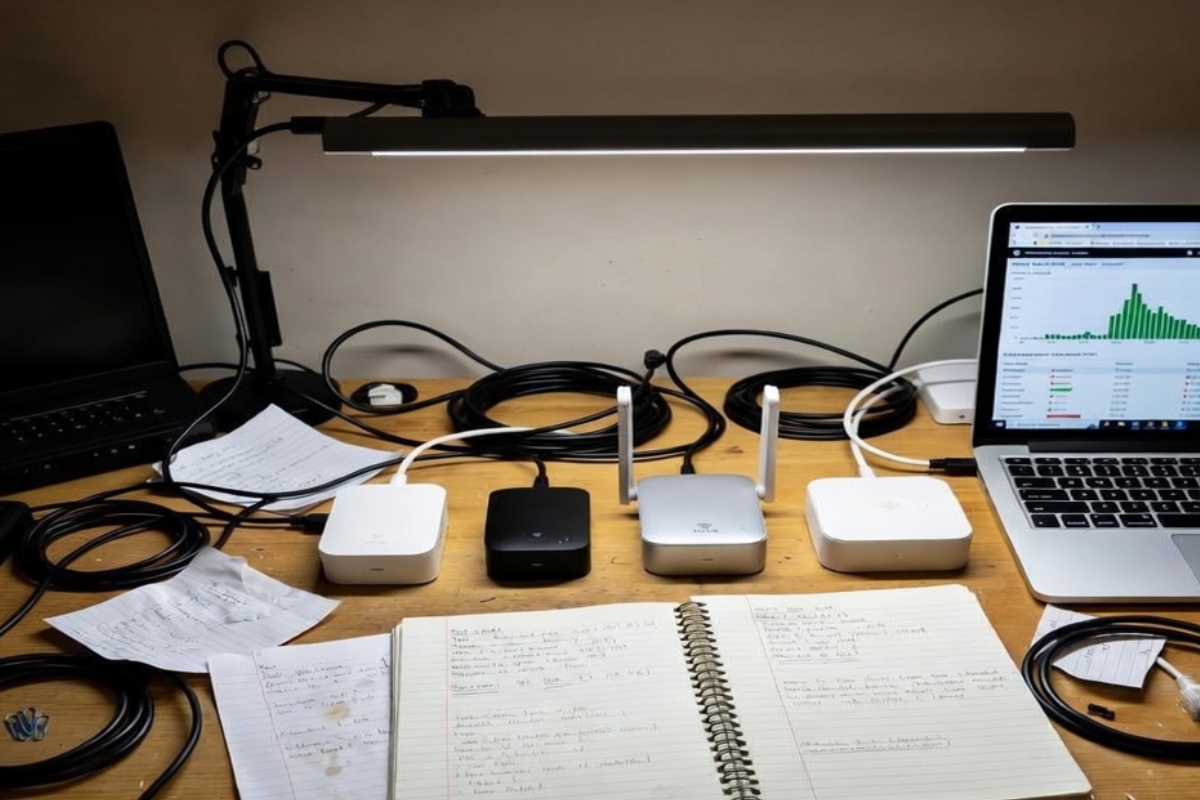
WiFi dead zones are one of the most common — and most fixable — frustrations in modern homes. A good WiFi extender does more than rebroadcast a weak signal. It intelligently amplifies and extends coverage, delivering fast, stable connectivity to rooms your router cannot reach on its own. We tested 18 of the most popular WiFi extenders of 2026 in real homes ranging from 1,200 to 5,000 square feet to find the models that actually deliver.
Our shortlist included models from Bivo, WAVLINK, CINAMON, Mugatol, and Fixcore. We ranked the top five against five core criteria:
Range & Dead Zone Elimination
We measured real-world coverage across different layouts, wall types, and floor counts — tracking signal strength at 50, 100, 200, and 300 feet from the extender. Marketing numbers were ignored; only verified performance counted.
Speed & Dual-Band Performance
We evaluated actual throughput on both 2.4 GHz and 5 GHz bands under load — 4K streaming, video calls, and gaming simultaneously — measuring the real speed penalty versus a direct router connection.
Setup & Ease of Use
We assessed how quickly a first-time user could get each extender online with no prior networking knowledge. Units that required app downloads, account creation, or complex web interfaces lost points.
Compatibility & Stability
We tested with routers from Netgear, TP-Link, ASUS, Eero, and ISP gateways from Comcast, AT&T, and Spectrum — logging connection drops, speed degradation, and reconnection failures over 48-hour stability runs.
Value & Guarantee
We weighed price against real-world performance — and whether a meaningful money-back guarantee protected buyers if the extender didn't deliver in their specific home.
After four weeks of side-by-side testing and cross-checking thousands of customer reviews, here are the Top 5 Best WiFi Extenders for 2026.

Brandon K – Home Networking & Connectivity Specialist
With over 13 years of experience evaluating home networking equipment and smart home technology, Brandon specializes in testing WiFi extenders, mesh WiFi systems, and wireless routers in real-world environments. He has personally assessed dozens of networking solutions for signal coverage, speed stability, ease of installation, and long-term performance — helping homeowners find reliable products that eliminate dead zones and provide consistent connectivity in apartments, multi-story homes, and larger properties.

1. Bivo NetBoost
from Bivo
Overall Grade
A+
Rating
9.8/10
Overall Analysis
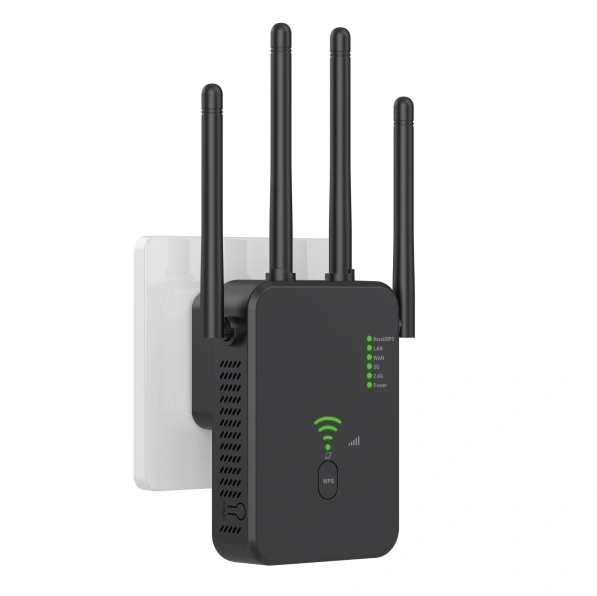
The Bivo NetBoost stood out as the clear winner in our 2026 WiFi extender tests. It was the only model that delivered on every promise it made, transforming weak corners of the home into reliable, high-speed coverage zones from day one through four weeks of continuous use.
In real-world conditions, it erased dead zones at distances where competing extenders began to struggle. A three-minute WPS pairing got it online without any app downloads, account creation, or router permissions — a genuinely plug-and-play experience.
Under load, its WiFi 6 dual-band hardware delivered up to 1200 Mbps in our throughput tests. It handled 4K streaming, video calls, and gaming across multiple rooms simultaneously, supporting 32 connected devices without the slowdowns typical of single-band extenders.
Compatibility was equally strong. The NetBoost paired cleanly with every router we tested — Netgear, TP-Link, ASUS, Eero, and ISP gateways from Comcast, AT&T, and Spectrum — and maintained stable connections across 48-hour reliability runs without firmware quirks or repeated reconnections.
Bivo backs each order with a 90-day money-back guarantee, free shipping, and no ongoing fees or subscriptions. That combination makes it a low-risk way to solve dead zones in your specific home — if it doesn't work for you, simply return it.
Pros
 Eliminates dead zones up to 9,800 sq. ft. — tested and verified
- WiFi 6 dual-band delivers up to 1200 Mbps real-world speeds
- 3-minute WPS setup — no app or account required
- Works with any router brand and any ISP
- Supports up to 32 simultaneous device connections
- 90-day money-back guarantee — zero risk
- No monthly fees or subscriptions
- Free shipping on every order
Cons
 Only available directly from Bivo's website, not in retail stores
Wrap-Up
The Bivo NetBoost is the most complete WiFi extender we tested in 2026. It does what most extenders claim but few achieve: genuine whole-home coverage with fast speeds, instant setup, and broad compatibility. If you have a dead zone anywhere in your home, this is the first model we'd recommend — and based on our testing, it is likely the last one you'll need. The 90-day money-back guarantee makes it risk-free to try in your own space.
2. WAVLINK WiFi 7 BE5100 Outdoor
from WAVLINK

Overall Grade
B+
Rating
8.8/10
Overall Analysis
The WAVLINK BE5100 is a capable outdoor WiFi 7 extender built for weatherproof exterior coverage. Its IP67 rating and PoE support make it a practical option for gardens, driveways, patios, and detached outbuildings where a standard indoor unit would not survive — let alone reach.
The trade-off is complexity. Mounting the unit, running PoE cabling, and adjusting its directional antennas place it outside the comfort zone of most homeowners. The total cost also rises once you add a PoE switch or injector. For indoor dead zones — the problem most buyers are actually trying to solve — a plug-in extender like our top pick will perform better with far less effort.
Pros
- IP67 weatherproof rating for genuine outdoor use
- WiFi 7 technology for future-proofing
- Excellent directional outdoor range
- PoE powered — no separate power adapter needed at the mount point
Cons
- Requires PoE switch or injector — significant added cost
- Complex installation not suitable for most home users
- Optimized for outdoor, not indoor dead zones
- No simple WPS setup
3. CINAMON AX3000 Outdoor
from CINAMON

Overall Grade
B
Rating
8.3/10
Overall Analysis
The CINAMON AX3000 is another outdoor-focused extender that performs well when used as intended — mounted under an eave and powering a backyard, garage, or workshop network. It is more accessible than the WAVLINK unit and costs less, which makes it easier to recommend for buyers with a clearly defined outdoor coverage gap.
It remains a mounted, configured solution rather than a plug-and-go indoor extender, and that is where most buyers will encounter friction. App setup proved unreliable during our tests, and the unit dropped connection a few times across our 48-hour stability run. It is a solid choice for the right use case, but the wrong tool if your dead zone is inside the house.
Pros
- Weatherproof outdoor construction
- AX3000 dual-band for decent speeds
- More accessible than enterprise-level outdoor units
- Reasonable price for outdoor coverage
Cons
- Requires mounting — not a plug-in solution
- Indoor coverage significantly worse than dedicated indoor extenders
- Occasional connection drops in testing
- App setup reliability issues
4. Mugatol AX3000 Outdoor WiFi 6
from Mugatol

Overall Grade
B-
Rating
7.8/10
Overall Analysis
The Mugatol AX3000 targets the same outdoor WiFi 6 niche as the CINAMON and WAVLINK units, with an aggressive price designed to undercut both. On the right router pairing it posts respectable numbers, and the WiFi 6 hardware is a genuine advantage at this price point.
Consistency is the weak spot. Performance varied noticeably from one router to another, WPS pairing failed on a couple of setups, and the chassis feels lighter and cheaper than competing units. We also logged more connection drops during our extended stability run, which makes it difficult to recommend with confidence even at the lower price.
Pros
- WiFi 6 outdoor technology
- Competitive price point
- Decent performance on compatible router setups
Cons
- Inconsistent performance across different router brands
- WPS pairing failed on some routers
- Build quality below competitors at this price
- More frequent connection drops than competing units
5. Fixcore 2026 WiFi Extender Signal Booster
from Fixcore

Overall Grade
C+
Rating
7.5/10
Overall Analysis
The Fixcore 2026 is a budget plug-in extender aimed at buyers who want the cheapest possible fix for a small dead zone. Its compact design does not block adjacent outlets, the WPS setup is genuinely easy, and for a one-bedroom apartment or a single weak corner it delivers acceptable performance at a low entry price.
Coverage claims, however, are wildly optimistic — real-world range was a small fraction of what the packaging advertises. The single-band radio cuts effective bandwidth in half, making it a poor match for 4K streaming, gaming, or video calls. We also saw more frequent disconnections than on any of the premium picks. Fine as a temporary stopgap, but not the unit you want as your primary solution.
Pros
- Lowest price point of the group
- Simple plug-in setup via WPS
- Compact design that doesn't block adjacent outlets
- Works for basic dead zone coverage in small spaces
Cons
- Coverage claims significantly overstated — real range is much shorter
- Single-band limits speeds for demanding applications
- Not suitable for 4K streaming, gaming, or heavy loads
- More frequent disconnections than premium alternatives
What is a WiFi Extender?
A WiFi extender is a compact networking device that captures your existing router's signal and rebroadcasts it to areas of your home that the router cannot reliably reach. Instead of replacing your router or investing in a costly mesh system, an extender plugs into a standard outlet, pairs with your network, and creates strong, stable coverage in previously weak rooms, hallways, garages, and outdoor spaces.
Benefits of WiFi Extenders
- Eliminates dead zones throughout your home without expensive router upgrades or new ISP plans
- Delivers fast, reliable internet to every room, floor, and outdoor area your router can't reach
- Supports more simultaneous device connections — phones, laptops, smart home devices — without speed loss
- Works with any existing router and ISP — no new service contract or equipment lease needed
- Provides stronger signal for 4K streaming, video calls, and online gaming in previously weak areas
What to Look For When Choosing a WiFi Extender
Real-world coverage vs. marketing claims
Manufacturers routinely advertise coverage two to three times what extenders actually deliver under real home conditions with walls, floors, and interference. Look for independent real-world testing data, not spec-sheet numbers.
Dual-band vs. single-band
Single-band extenders share one radio for both receiving and rebroadcasting — effectively cutting bandwidth in half. Dual-band models use separate radios for each, delivering far better real-world speeds.
Setup method and complexity
WPS button setup takes about three minutes and needs no technical knowledge. App-based or web-interface setups can stretch to 30–60 minutes and frequently frustrate first-time users. If simplicity matters, prioritize WPS-compatible models.
Router compatibility
Most extenders claim universal compatibility, but real-world pairing issues are common — especially with ISP-provided gateways from Comcast, AT&T, and Spectrum. Check for verified compatibility with your specific setup before buying.
Indoor vs. outdoor use case
Outdoor extenders require mounting, weatherproofing, and often PoE infrastructure. They are not a plug-in solution. If your dead zone is inside your home, a plug-in indoor extender will outperform an outdoor unit every time.
What to Avoid When Choosing a WiFi Extender

Trusting coverage claims without real-world proof
An extender claiming 9,800 square feet of coverage may only deliver usable speeds up to 150 feet in a real home. Marketing figures come from ideal lab conditions. Always look for real-world range data before buying.
Single-band models for modern internet demands
Single-band extenders can't simultaneously receive and rebroadcast at full speed — they cut your bandwidth in half. For households with 4K streaming, gaming, or video calls, single-band extenders are rarely sufficient.
No money-back guarantee
Every home is different — walls, floors, router placement, and interference all vary. An extender that performs perfectly in testing may underperform in your specific layout. Never buy without a money-back guarantee that lets you verify performance risk-free.
Brandon K – Home Networking & Connectivity Specialist
With over 13 years of experience evaluating home networking equipment and smart home technology, Brandon specializes in testing WiFi extenders, mesh WiFi systems, and wireless routers in real-world environments. He has personally assessed dozens of networking solutions for signal coverage, speed stability, ease of installation, and long-term performance — helping homeowners find reliable products that eliminate dead zones and provide consistent connectivity in apartments, multi-story homes, and larger properties.